
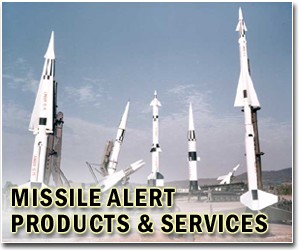
Raytheon, the world's largest missile maker, has won a $1.1 billion order from Taiwan for new Patriot missile systems.
The order covers an initial ground-system hardware contract valued at $965.6 million and a $134 million contract for spares.
The order, according to a statement by Raytheon, will include advances in technology, improved man-machine interface and reduced lifecycle costs.
The deal has been in the making since October 2008 when the U.S. Defense Department proposed a $6.46 billion arms sale package to Taiwan, including the most advanced Patriot anti-missile system.
Raytheon said the new Patriot fire units will be produced in Massachusetts, Texas and Alabama. The missiles themselves are expected to be part of a different contract.
The U.S. company already won smaller orders from Taiwan earlier this year and in 2008 for upgrades to the Patriot systems it already has. Those contracts were clinched in order to upgrade the existing systems to Configuration 3, the same upgrade Raytheon is currently completing for the U.S. Army.
"Configuration 3 is Raytheon's most advanced Patriot system and allows the use of Lockheed Martin's Patriot Advanced Capability-3 (PAC-3) missiles, Raytheon's Guidance Enhanced Missile Tactical (G.E.M-T) Missiles and allows missile launchers to be placed miles in front of the radar of the system, rather than right next to the radar as in earlier Patriot systems," the DefenseNews Web site reported.
Patriot missiles intercept incoming ballistic missiles.
"The Patriot system is a vital element to providing superior integrated air and missile defense capabilities for the protection of Taiwan," said Daniel Smith, president of Raytheon Integrated Defense Systems.
"Raytheon has provided advanced technology, innovation and support in Taiwan for more than 40 years, and we are honored to continue that partnership today and in the future," he added.
Local media reported that the contract also includes 30 Apache attack helicopters, 32 Harpoon submarine-launched missiles, 182 guided Javelin missile rounds and four E-2T anti-submarine plane system upgrades.
Even so, the lucrative deal has sparked fierce opposition from China, which considers Taiwan a breakaway province of its own.
China has since then insisted that the sale is in violation of a U.S. commitment to limit weapons transfers to Taiwan.
Taiwan media suggested, however, that the U.S. administration may soon announce more arms sales to the country.
Washington has long kept its arms sales to Taiwan highly confidential, disclosing information only a couple of days before the formal signing of contracts, in a bid to prevent possible reactions from China.
China now has about 1,500 missiles aimed at Taiwan.
Share This Article With Planet Earth
