
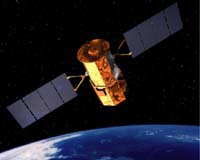
Raytheon has completed manufacture and testing of the optics detector module for the aerosol polarimetry sensor. The sensor will ride on the NASA Glory satellite to help agency and other federal officials better understand the impact of aerosols on global warming and climate change.
The central component of the sensor, the module contains 161 optical elements, including six telescopes precision-aligned and packed into a tightly compact area measuring less than 130 cubic inches.
The module has performed successfully in characterization and optimization testing, representing retirement of most of the risk in the Glory APS program.
"With the successful demonstration of the optics detector module, we are well on our way to final delivery of the Glory aerosol polarimetry sensor," said Brian Arnold, vice president for Raytheon's Space Systems group.
"We are proud to be a part of this critical mission and look forward to contributing to the science community's understanding of the forces affecting climate change."
In orbit the sensor will take accurate measurements of the polarization and intensity of various aerosols in the earth's atmosphere at wavelengths from visible to short-wave infrared to analyze and determine their anthropogenic (man-made) or natural origin.
This information will help policy makers comprehend more fully the global processes that contribute to climate change.
The Raytheon team is completing the electronics module for the sensor in expectation of delivering the payload to NASA in the fall.
