
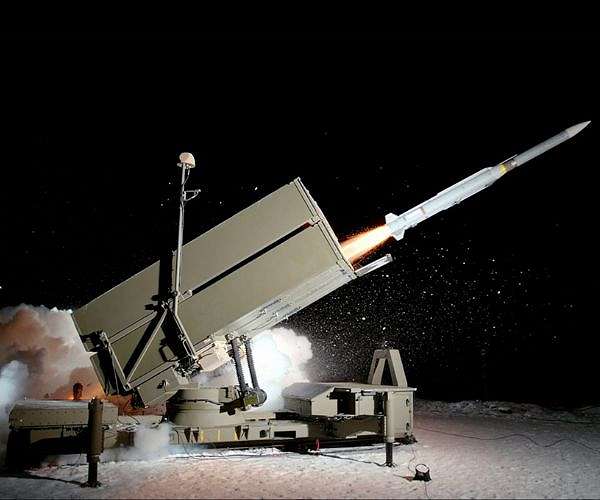
Raytheon Technologies Corporation, working alongside Kongsberg Defence and Aerospace, has recently announced the successful first flight test of an updated version of the AMRAAM-Extended Range (AMRAAM-ER) missile. This test, which received support from the Norwegian Ministry of Defense (MoD) and Armed Forces, utilized the National Advanced Surface-to-Air Missile System (NASAMS) to showcase significant advancements in missile technology and defense capabilities.
The AMRAAM-ER variant tested features an innovative design that incorporates the guidance section from the AIM-120 C-8 missile. This new configuration is further enhanced by a more powerful 10-inch rocket motor from Nammo and a 10-inch Control Actuator System by Kongsberg Defence and Aerospace, collectively known as the Norwegian Propulsion Stack. This development benefits from the collaborative efforts of the Norwegian MoD, illustrating the global partnership driving this advancement in defense technology.
Paul Ferraro, President of Air and Space Defense Systems at Raytheon, underscored the importance of this technological integration, stating that it ensures the AMRAAM-ER's advanced capabilities as a surface-launched munition for the foreseeable future. Ferraro also pointed out the critical role of agile software upgrades in keeping the AMRAAM ahead of evolving threats, affirming its status as a leading missile technology.
The flight test focused on a missile firing that followed a predefined flight path. This was to confirm the missile's safe release from the NASAMS launcher and to assess its performance during flight. The test's success highlights the AMRAAM-ER's improved capability to engage targets at increased ranges and altitudes compared to earlier models.
The AMRAAM-ER is designed to be compatible with the NASAMS launcher, offering an advanced level of air defense protection. NASAMS, a versatile medium-range air defense solution, is the result of a long-term partnership between Raytheon and Kongsberg Defence and Aerospace. This collaboration is built on years of shared experience, industrial cooperation, and significant investments by all involved parties, with the goal of keeping NASAMS at the cutting edge of air defense against sophisticated and changing air threats.
