
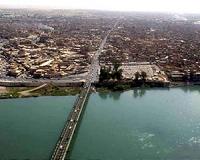
An offensive to encircle Iraq's second city of Mosul should begin "in the next few weeks", Britain's Defence Secretary Michael Fallon said Friday, after a visit to the country.
Mosul has been held by Islamic State jihadists since June 2014 and British jets are part of a US-led coalition flying missions against them in Iraq and Syria.
"Though Mosul is a large and complex city, it will fall and will fall soon. I expect the operation for its encirclement to begin in the next few weeks," Fallon said in London following a three-day trip to Iraq.
He added that Iraqi forces were moving into a tactical assembly area in preparation for the assault.
"We ought to be able to get Daesh (another term for the IS group) out of Iraq over the next few months — the remaining months of this year and next year," Fallon added.
Top US military officers have hinted that the final push for Mosul could begin next month, but there are still significant military, political and humanitarian obstacles between the launch of the operation and entering and retaking the city.
The drive will involve Iraqi soldiers and police, pro-government paramilitaries and Kurdish peshmerga fighters — forces that in some cases have not operated together before and do not have unified command structures.
The United Nations says that up to one million people may be displaced by the fighting.
IS gun, suicide bomb attacks kill 12 in Iraq's Tikrit
Samarra, Iraq (AFP) Sept 24, 2016 –
Militants killed 12 people in gun and bomb attacks on Saturday in the northern city of Tikrit, police said, with the Islamic State group later claiming responsibility for the violence.
IS seized Tikrit in June 2014, but the city has largely been spared the attacks that have plagued other parts of the country since its recapture last year.
Police officers said that militants shot dead four security personnel at a checkpoint on the west side of the city, then continued north and detonated an explosives-rigged vehicle at another checkpoint, killing eight more people.
The attacks also wounded a total of 23 people, according to the officers.
IS issued a statement claiming the attacks, but gave a different account of how they unfolded, saying that four militants — three Iraqis and a Tajik — were involved and detonated multiple bombs.
According to IS, the militants first attacked a checkpoint in the area with silenced weapons, killing its guards and leaving one jihadist behind to block the road.
One suicide bomber then set off a truck bomb at an entrance to the city, while two more detonated explosive vests at a gathering of police and pro-government paramilitaries close to a military base near Tikrit, the jihadist group said.
Hometown of executed dictator Saddam Hussein, Tikrit lies 60 kilometres (100 miles) north of Baghdad and was the second city to fall to IS in 2014 as the jihadists swept through large areas north and west of the capital.
It was also the first city to be recaptured by Iraqi forces, which are now preparing for a push on Mosul, a city north of Tikrit that is the last one held by IS in the country.
Western officials have indicated that the drive for Mosul, Iraq's second city, may begin next month, although Baghdad has declined to specify when it will start.
While the announcement of the operation may be coming soon, Iraqi forces, which in some cases are dozens of kilometres (miles) away, will then have to fight their way to the city and surround it before an assault can take place.
Even after Mosul is retaken, the jihadists will still have the ability to carry out attacks like those in Tikrit on Saturday.
Analysts have warned that IS is likely to resort to more such attacks in the face of the loss of its last urban bastion in Iraq.
