
Climate change and the impact it has on national and international security was not included in the US national defense strategy, unveiled by Defense Secretary Jim Mattis on Friday.
The move is perhaps not surprising given that President Donald Trump has called climate change a hoax, and last June announced that he would pull the United States out of the historic Paris climate pact unless there were changes to the US side of the deal.
In 2016 President Barack Obama labeled climate change a threat to national security, and for years experts and scientists have pointed to the impacts of natural disasters, famines and rising sea levels as prompting refugee flows that threaten global stability.
After his confirmation hearing almost a year ago, Mattis had said climate change can drive instability and threaten US military bases around the world.
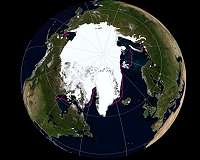
"The effects of a changing climate — such as increased maritime access to the Arctic, rising sea levels, desertification, among others — impact our security situation," Mattis told senators in written testimony after a January 2017 confirmation hearing, according to documents obtained by ProPublica.
Mattis's deputy, Patrick Shanahan, last month told Pentagon reporters that the exclusion of climate change from the national defense strategy does not necessarily mean the Pentagon does not see it as a threat.
"It doesn't mean that it is not a priority or that it is a priority. What it says is in the national defense strategy, we don't address it," Shanahan said.
Release of ancient methane due to changing climate kept in check by ocean waters
Ocean sediments are a massive storehouse for the potent greenhouse gas methane.
Trapped in ocean sediments near continents lie ancient reservoirs of methane called methane hydrates. These ice-like water and methane structures encapsulate so much methane that many researchers view them as both a potential energy resource and an agent for environmental change.
In response to warming oc … read more
