
Pakistan intends to launch a self-controlled $324.3 million Remote Sensing Satellite System. The system is intended to ensure strategic and unconditional supply of worldwide satellite remote sensing data. The Pakistan Space and Upper Atmosphere Research Commission will implement the project over the next six years.
President Pervez Musharraf has approved the project in principle, which will require an annual expenditure of about $2.5 million per year, with working expenses estimated at $25 million.
Musharraf has directed the Pakistan Space and Upper Atmosphere Research Commission to develop the capability to make and launch different types of satellites, in particular communications, remote sensing and weather satellites, adding that Pakistan's space program must assist in government plans for mass education, information technology, communications, agriculture, mineral development, mapping and geographic information systems, atmospheric sciences, environment and pollution monitoring and national security.
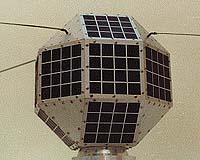
Pakistan began its space program in 1990 with the launch of its first experimental satellite Badr-1, sent into low earth orbit by a Chinese vehicle from the XI Chang Launch Center. Badr-1 was followed by Badr-2, launched in 2001, which carried an experimental earth-imaging payload.
