
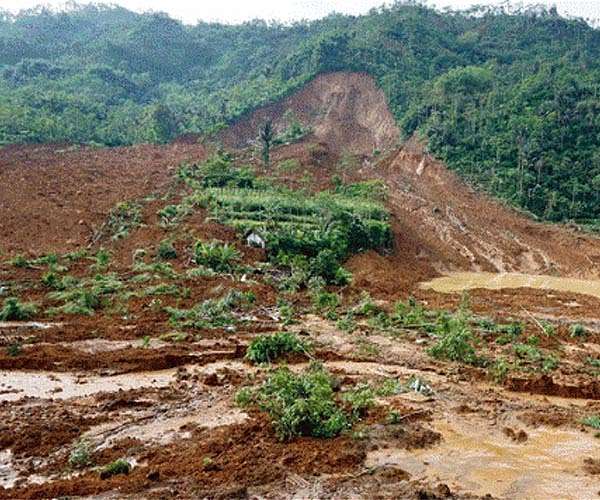
A landslide at a jade mine in northern Myanmar Wednesday killed at least one person and left dozens missing, a member of the rescue team told AFP.
Scores die each year working in the country's lucrative but poorly regulated jade trade, which uses low-paid migrant workers to scrape out a gem highly coveted in neighbouring China.
The disaster struck at the Hpakant mine close to the Chinese border in Kachin state, where billions of dollars of jade is believed to be scoured each year from bare hillsides.
"About 70-100 people are missing" following the landslide that struck around 4:00 am (2130 GMT Tuesday), said rescue team member Ko Nyi.
"We've sent 25 injured people to hospital while we've found one dead."
Around 200 rescuers were searching to recover bodies, with some using boats to search for the dead in a nearby lake, he added.
A photo posted on social media by a local journalist who said he was at the scene showed dozens of people standing on the edge of the lake, with some launching boats into the water.
Local outlet Kachin News Group said 20 miners had been killed in the landslide.
Myanmar's fire services said its personnel from Hpakant and nearby town of Lone Khin were involved in the rescue effort but gave no figures of dead or missing.
– Deadly industry –
Civilians are frequently trapped in the middle of the fight for control of Myanmar's mines and their lucrative revenues, with a rampant drug and arms trade further curdling the conflict.
Last year heavy rainfall triggered a massive landslide in Hpakant that entombed nearly 300 miners.
A February military coup also effectively extinguished any chance of reforms to the dangerous and unregulated industry initiated by ousted leader Aung San Suu Kyi's government, watchdog Global Witness said in a report this year.
The coup has also sparked fighting in Kachin state between the Kachin Independence Army, which has waged a decades-long insurgency, and the Myanmar military, Global Witness added.
In May, the military launched air strikes against the group, which later told AFP it had downed a helicopter gunship during fierce clashes in the country's far north.
Myanmar junta arrests hundreds of jade traders in Mandalay
Yangon (AFP) Dec 21, 2021 –
Myanmar authorities have arrested hundreds of jade traders working at emporiums that compete against a junta-backed market in Mandalay, traders told AFP on Tuesday.
Taxes on the shady, multi-billion dollar jade industry are a major source of revenue for Myanmar's military and help fund rights abuses, advocacy groups say.
On Monday junta soldiers swooped on three markets in Mandalay — where most stones pass through — and "arrested hundreds" including several Chinese brokers, one trader told AFP on condition of anonymity.
None of the arrests took place at Mandalay's sprawling government-run jade market, which closed for months during the pandemic and was bombed by the anti-junta "People's Defence Forces" shortly after it re-opened in October.
A second broker who was not present during the raids said he had been told hundreds had been detained, including several Chinese. Local media reported around 300 had been arrested.
One outlet posted a clip purporting to show the raid with at least nine police vehicles pictured outside a building.
AFP digital verification reporters found no evidence the clip had appeared online before Tuesday. The video seemed to have been shot in Mandalay.
A junta spokesman could not be reached for comment as to why the arrests had been made.
After the bombing on the government-backed market, the junta ordered merchants to return to the venue, adding that any stalls that did not re-open would be "seized".
But many brokers in Mandalay had kept away, the two traders told AFP.
"Not many people are doing business there," said one.
"People are also afraid of the People's Defence Force warning as well."
The raids came as Myanmar holds a pearl and jade emporium that was attended last week by junta chief Min Aung Hlaing.
The Southeast Asian country has been mired in chaos since the February putsch, with the military trying to crush widespread democracy protests and the economy in crisis.
The emporium showed the military's "desperation to secure internationally-traded currency," Hanna Hindstrom, Senior Campaigner for Myanmar at Global Witness said on Friday.
