
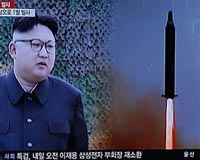
Media reports of ongoing weapons production in North Korea have circulated extensively in recent weeks. Despite peace overtures, North Korea continues to manufacture fissile material that seems destined for nuclear warheads, and also seems to be stepping up production of its missiles in a new building at a missile manufacturing site.
The immediate conclusions are obvious. North Korea is bolstering its arsenal, and also hedging its bets against a breakdown of the peace process. But other critical details should be gleaned from these activities.
The design of North Korea's missiles and nuclear warheads is now essentially frozen. This is a conclusion that has been steadily building for months, but it now seems unassailable. Evidence to support this case has built with a sequence of statements and actions taken by North Korea over the past year.
The ending of missile tests in late 2017 only came in the wake of a furious pace of tests that year, and suggested that no more testing was necessary. At the time, much of this testing was focused on long-range missiles capable of hitting the continental USA.
At the Trump-Kim summit in Singapore this year, North Korea promised to dismantle a rocket engine test stand, and satellite imagery suggests that this is being done. Thus, actions and statements have removed or reduced the capability for more missile testing.
Recently, the media has circulated more reports of missile manufacturing, with the intelligence derived from satellite imagery. Production of missiles in a new building suggests that a recently developed type of missile is being manufactured there. Presumably, this building is constructing one type of the new missiles tested last year.
Mass production is the final stage in the development of a new missile. It suggests that the design is mature, but it also makes it difficult to change the design. Thus, the design of these missiles won't change much, if at all, from what we have already seen.
That has strategic implications for North Korea as well as international observers. North Korea will soon have a reliable arsenal of inter-continental ballistic missiles. But it also suggests that international observers (or inspectors who visit the country) will be able to recognize what they see.
The design of these missiles has been extensively documented in test launches that have been tracked with radar. The North Koreans themselves have released images and video of the missiles, even showing the launch preparations for the 2017 tests. In some ways, that's reassuring. What you get is what you see. This will certainly help the world to plan its response to these developments.
