
California-based small-rocket company Astra plans a listing on the Nasdaq stock exchange to raise up to $500 million as it tries to capture more of the growing launch business, the company announced Tuesday.
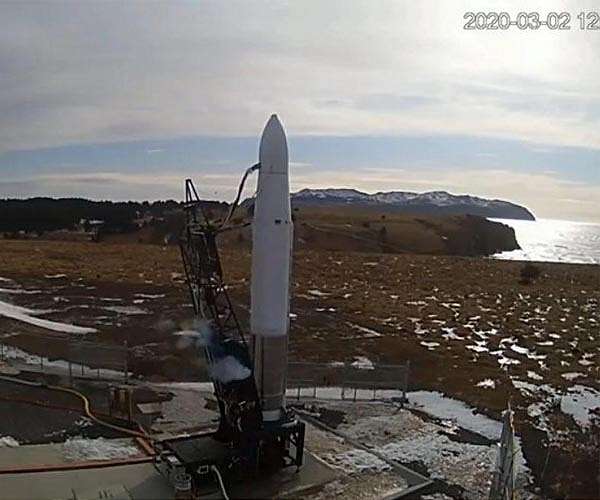
Astra is focused on building small rockets rapidly, in assembly-line fashion. The company launched a demonstration rocket into space for the first time from Alaska in December. It flew high enough to enter orbit, but fell just short of orbital velocity.
Still, that success was enough to convince more businessmen to invest, said Astra co-founder and CEO Chris Kemp, a former NASA chief technology officer.
"We have now our first 50 launches under contract through a diverse group of commercial and government customers — highly reputable, well-funded, all currently in orbital operation," Kemp said Tuesday during a call with investors.
Astra, which was founded in 2016, would be the first space launch company listed on Nasdaq. Traditional launch companies such as Northrop Grumman have been associated with the defense sector and the New York Stock Exchange, rather than the Nasdaq, which is characterized by tech and Internet stocks.
The public listing, if approved, would take place in late 2021 when Astra combines with Seattle-area investment company Holicity, which is traded on Nasdaq. The new company will trade under the symbol ASTR.
Holicity's stock shot up by more than 40% Tuesday morning to $15.31 a share, and traded even higher as the day went on.
The growth of small satellite business fueled Holicity's interest in Astra, Holicity CEO and entrepreneur Craig McCaw said on the investor call.
"We used to think of one satellite as a big deal and now there are companies launching thousands of satellites," McCaw said.
"At the same time we recognize that humanity wants to see and know as much as you can" using Earth observation satellites, he said.
A recent satellite launch for SpaceX illustrated that trend when it carried a record-breaking 143 small satellites into orbit in January.
Astra has booked over $150 million in launch contracts, according to the company. It plans to start launching customer payloads this summer and begin monthly launches by year's end.
