
At present, power stations run using renewable energies (wind, solar or wave) produce energy peaks that are wasted, since they do not coincide with the energy needs. Storing this energy in batteries for its later use would be a very costly process that requires huge amounts of very expensive pure metals, such as nickel or copper, which is why this process is currently hardly ever used.
The doped carbon gel developed by the UGR acts as a highly-dispersed (it is made up of 90% carbon and a small quantity of heavy metals) and effective electro-catalyst, which means it enables CO2 to be turned into hydrocarbons at a low cost.
This new material, developed entirely at the UGR, following more than 10 years of research into carbon gels, has recently been patented by the Institution's Office for the Transfer of Research Results (OTRI).
As the project's principal researcher, Agustin F. Perez Cadenas, explains, the doped carbon gel "is not a magical solution to prevent CO2 emissions into the atmosphere and stop the contamination caused by the greenhouse effect, but it does enable them to be reduced considerably, as well as reducing energy costs".
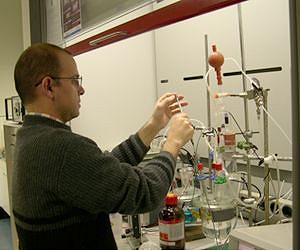
At the moment, this system is in its laboratory phase and has still not been applied in actual power stations, though the tests carried out at the UGR have led to some "highly promising" results.
