
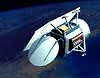
Washington DC – Dec 9, 1997 – The most ambitious naval oceanographic research satellite ever flown has been delayed until late January, according to the Space and Naval Warfare Systems Command. The military satellite has been awaiting launch from the Air Force Spaceport at Vandenberg Air Base, Calif. since September, 1996, but checkout delays with the Taurus space booster have been identified as the cause of the year-long wait.
While no hard and firm date has been approved by Navy space officials, late
January is now believed to be the most likely target. The Taurus rocket
that will lift the 300 kg. satellite has flown but once before, in its
first launch in late 1994.
Integration problems with the payload and booster have repeatedly pushed the launch back, which was also planned for last October before the latest round of delays.
The Naval Geosat Follow-On satellite will fly the most advanced
oceanographic radar altimeter ever put into sunsynchronous orbit. The
sensors will sweep the world's oceans, gathering data for Navy scientists
on temperatures, depths, amounts of vegetation, and ice accumulations in
the seas.
These are all issues effecting ships on patrol or during military missions. The science data will also help meteorologists better understand weather patterns and potential causes of global warming.
The Geosat is built by Ball Aerospace Corp. and is a follow-on to the
original 1987 plans, then aimed at anti-submarine warfare data. Changing
geopolitics in the decade passed has shifted the mission more to
understanding the ocean environment, and better preparing for blue water
and coastal water deployments by U.S. fleets.
