
Mysterious gray blobs washing up on eastern U.S. beaches in the wake of Hurricane Irene are alive, a researcher says — they are in fact sponges.
The blobs found from Virginia to Long Island, N.Y., have been reported by witnesses as being of "various sizes," with the smallest "around the size of a baseball," with a texture ranging from "kind of rubbery or leathery" to "kind of soft," a release from the Virginia Institute of Marine Science at the College of William and Mary said Thursday.
VIMS Professor Emmett Duffy has a simple explanation for the mysterious objects.
"They're potato sponges," Duffy says, normally inconspicuous animals that inhabit shallow coastal habitats around the world, attached to the seafloor with a network of protein fibers and glassy, needle-like "spicules" that form something like an anchor.
Large waves and strong currents — such as those produced by a hurricane — can dislodge large numbers of the sponges, freeing them to float to the surface and wash ashore.
Clogged with storm debris and no longer able to filter feed, the sponges eventually die, Duffy said.
Potato sponges are not poisonous, but VIMS scientists caution people to avoid touching.
New tropical storm takes aim at Mexico: forecasters
Miami (AFP) Sept 8, 2011 –
A new tropical storm in the Caribbean, the 14th named system of the 2011 season, took aim at Mexico on Thursday and threatened to grow into a hurricane in the next two days, US forecasters said.
Tropical Storm Nate was cycling 130 miles (205 kilometers) west of Campeche, Mexico with maximum sustained winds of 45 miles (75 kilometers) per hour, the Miami-based National Hurricane Center said in its 0600 GMT advisory.
The forecasters issued a warning for the Mexican coast from Chilitepec to Celestun, where tropical storm conditions were expected in the next 12 hours.
"Some strengthening is forecast during the next 48 hours… and Nate could become a hurricane by Friday," the NHC said.
In the meantime, it was expected to dump two to four inches (five to 10 centimeters) of rain — with isolated deluges of up to eight inches — over the Mexican states of Campeche, Tabasco and southern Veracruz, it said.
The storm is also expected to raise the tide along the coast by up to three feet (one meter).
Another tropical storm, Maria, was meanwhile stirring far out in the Atlantic ocean, some 1,005 miles (1,620 kilometers) east of the Leeward Islands, with sustained winds of up to 50 miles (85 kilometers) per hour.
The NHC issued a tropical storm watch for the Leeward Islands of Antigua as well as Barbuda, Montserrat, Nevis and St. Kitts, adding that the Virgin Islands and Puerto Rico "should monitor the progress of Maria."
It added, however, that "little change in strength is forecast during the next 48 hours."
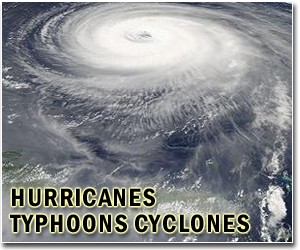
A greatly weakened Hurricane Katia was meanwhile expected to pass between the US east coast and Bermuda later on Thursday without making landfall, forecasters said.
The NHC on Wednesday downgraded Katia to a category one hurricane but issued a tropical storm watch for Bermuda as the storm neared, packing winds of up to 90 miles (150 kilometers) an hour.
Although the storm was forecast to steer well clear of the US mainland, the NHC warned of continuing high and "life-threatening" ocean swells along the eastern seaboard, Bermuda and east-facing beaches in the Bahamas.
Much of the US east coast is still recovering from last week's Hurricane Irene, which caused widespread evacuations and flooding.
