
Millenium Biologix ("Millenium") announced September 6 that it has been awarded a key continuation of the initial Canadian Space Agency contract to develop an automated osteoporosis mini lab for space missions.
The first of this series of space contracts for the Enhanced OSTeoporosis Experiments in Orbit ("eOSTEO") was announced in May 2005.
This contract amendment progresses eOSTEO through a formal CSA-driven Detailed Design Phase and brings the total value to date from this series of contracts to $726,000. Subsequent contracts are expected to progress the program through Fight Hardware Manufacture, and Science and Mission Support.
About The OSTeoporosis Experiments in Orbit
The OSTeoporosis Experiments in Orbit ("OSTEO") system has been proven in two earlier manned NASA space missions (STS-95 and STS-107), and is now being re-designed for use in unmanned missions.
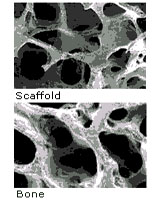
This enhanced OSTEO mini lab ("eOSTEO") uses Millenium's proprietary Skelite technology, which is an ideal medium for growing bone cells in research studies related to osteoporosis and bone loss.
The first flight of eOSTEO is scheduled to be launched in 2007. The Russian unmanned 12 day Foton 3 mission is expected to carry two eOSTEO payloads: one containing Canadian-based science, the other containing European Space Agency science.
In parallel with these development activities, Millenium is working closely with the CSA and ESA to ensure that all the mission integration activities for the Russian TsSkB Foton team are met in preparation for the scheduled launch.
