
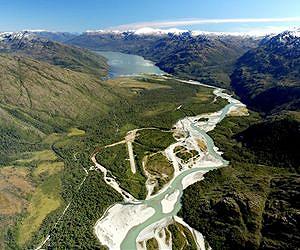
A controversial $3.2 billion hydroelectric project billed as key to satisfying Chile's growing energy needs but potentially an environmental concern, got a green light Monday.
A regional environmental panel in the cool and wet south of the South American country approved the massive HidroAysen project as thousands of protesters took to the streets to picket against it.
The two-billion-euro project entails the construction of five hydroelectric power stations, two along the Baker River and three on the Pascua River, in an area some 1,600 kilometers (1,000 miles south of Santiago).
Expected to take 50 years to build, it would generate 2.75 gigawatts of electricity — or 20 percent of current capacity — to help meet Chile's energy needs, which are expected to increase 80 percent by 2025.
Approval by the regional environmental panel had been widely expected despite stiff opposition from green activists seeking to protect the Patagonia region.
Thousands took to the streets around the country to protest against the project, and in the capital Santiago police used water hoses and tear gas to disperse around a thousand protesters and said they arrested about a dozen people.
Other demonstrations were reported in Valdivia and Temuco in the south and Valparaiso in the west, where police also intervened to disperse the crowds.
The paths used for some 2,000 kilometers (1,200 miles) of power cables and towers are still subject to a separate environmental review and could require another $4 billion dollars in investment.
A coalition called "Chilean Patagonia Without Dams" contends the project is unnecessary and would endanger pristine forests in a region that includes widely admired glaciers and lakes.
Opponents claim it will sully wilderness areas of Patagonia, flooding some 5,900 hectares (14,000 acres).
They argue that the energy would be used mainly for the mining sector, that the environmental review has been inadequate, and that Chile should pursue less damaging energy sources such as solar and wind.
An opinion poll in April showed 61 percent of Chileans opposed the project.
But the consortium of Chile's Endesa and the Spanish firm Colbun SA has launched its own public relations effort, claiming the project would produce clean, renewable energy and reduce demand for imported fossil fuels.
President Sebastian Pinera said Chile, where economic growth is estimated at 6.5 percent and electricity is rationed, has few alternatives, especially with nuclear power being reconsidered in the wake of the disaster in Japan.
"If HidroAysen is approved it would be 100 percent in compliance with environmental legislation," Pinera said over the weekend. "If we don't have hydroelectric energy, there will be more coal-fired power plants."
Share This Article With Planet Earth
