
In a town all but destroyed when its salt lake overflowed over three decades ago, the desolation is surreal: from silvery-white empty houses and hotels to trees, stark and dead; and one lonely man who calls this home.
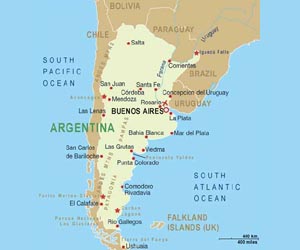
Once a lake country spa town south of Buenos Aires, Epecuen is a lagoon with a salinity level only topped by the Dead Sea. For decades, tourists visited to take its waters believing they were good for one's health.
Everything came crashing down in 1985 when a long period of heavy rains sent the lagoon bursting over its banks, and it swept over a busy small town.
"I had a bunch of cats and dogs, and they ran away a couple days before the flood and I never saw them again," Norma Berg, 48, told AFP, recalling her childhood spent here, until the flood.
"I think my pets could feel that the water was coming," Berg said, as she glanced at the rubble of the childhood home she fled.
A town of about 40 square blocks, Epecuen was submerged beneath 10 meters (30 feet) of water.
Even when the waters eventually receded, the country town, 550 kilometers (340 miles) south of the capital, was never rebuilt. Its welcoming little hotels seem frozen in time, rot and rust, glistening with the salt in which they were steeped.
Berg recalls that fateful date — November 10, 1985 — when the flood barely left her family and the town's 1,500 other residents enough time to grab some belongings and run.
"A lot of the locals never, ever came back; other people just died of the shock and stress of losing everything," Berg recalled sadly.
But someone did come back. One man.
"Until about four or five years after the flood, when the waters were still high, nobody came around here at all," said Pablo Novak, 81.
"I was totally alone. All day, every day," said Novak, now the town's only inhabitant.
Every day, he climbs on his bicycle and rides around surveying the eerie shells of 185 hotels, restaurants and other businesses that existed before 1985.
"I am OK here. I am just alone. I read the newspaper. And I always think of the town's golden days," of the 1960s and 1970s, says Novak. Back then as many as 20,000 people would visit every year to take the waters here.
Visitors pick up on Epecuen's spooky vibe eyeing abandoned beds from a former old folks home; dozens of stranded, toppled night tables from local hotels; and upended materials visitors and businessmen tried to pry out of the rubble to reuse as construction materials.
The town's surreal silvery cast has inspired filmmakers including Roland Joffe who in 2009 filmed the Spanish civil war-drama "There Be Dragons" here; and Argentina's Pino Solana who filmed scenes of his "El viaje" ("The Journey") locally.
Share This Article With Planet Earth
