
Malaysia said Thursday it has suspended three major China-backed projects worth billions of dollars, the latest big-ticket items to be axed by the new government as it reviews deals signed by ousted prime minister Najib Razak.
The deals were among several Beijing-backed projects signed by scandal-hit Najib, who was unseated by his former mentor Mahathir Mohamad in elections last May.
Finance Minister Lim Guan Eng said he had ordered the suspension of two pipeline deals and a 688-kilometre (430-mile) rail link worth a combined 90.4 billion ringgit ($22.35 billion).
The pipeline projects had been awarded to China Petroleum Pipeline Bureau, while the China Communications Construction Company served as the main contractor for the East Coast Rail Link.
Lim said Mahathir had ordered the suspensions in a bid to target Malaysia's estimated $250 billion national debt and other liabilities.
"The decisions are solely directed towards the related contractors relating to the provisions mentioned in the agreements, and not at any particular country," Lim said, in an apparent attempt to allay concerns that Beijing was being singled out.
Malaysia's previous government under Najib had warm ties with China and signed a string of deals for Beijing-funded projects.
But critics say many agreements lacked transparency, fuelling suspicions they were struck in exchange for help in paying off debts from the 1MDB financial scandal which ultimately helped bring down Najib's regime.
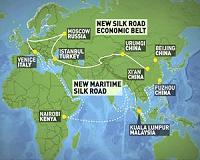
Mahathir, 92, has pledged to review Chinese deals seen as dubious, calling into question Malaysia's status as one of Beijing's most cooperative partners in its regional infrastructure push.
In May he postponed plans to build a high-speed rail link between Singapore and Malaysia, which had been agreed on several years ago, saying it was too costly.
Song Seng Wun, a regional economist with CIMB Private Banking, said the latest suspensions could prompt some investors to hold back.
"Anyone with any activities related to the previous administration itself will be lying low," he told AFP.
"They wouldn't be starting any new projects because they might not be sure that their existing project or contracts might (not) come under review."
China pledges more 'selfless' loans to Sri Lanka
Colombo (AFP) July 5, 2018 –
China vowed Thursday to keep providing financial help, including loans, to Sri Lanka under its massive "Belt and Road" infrastructure plan despite warnings about the island nation's debt mountain.
Dismissing "Western media" claims of a "debt trap", China's embassy in Colombo also rejected a recent New York Times report about alleged corruption in Chinese projects on the island.
Sri Lanka last year granted Beijing a 99-year lease on a new port on one of the world's busiest shipping routes after being unable to afford to repay Chinese loans for the $1.4-billion project.
This stoked concerns, including in Western countries and India, about President Xi Jinping's signature $1 trillion project of funding infrastructure projects across Asia and beyond.
The embassy statement put China's Sri Lankan loan portfolio at $5.5 billion, just over a tenth of Colombo's total $51.82 external debt. It did not disclose what other projects it aims to finance.
"China will continue to provide selfless support, including much-needed funds for the development of Sri Lanka," the statement said.
"The so-called 'Debt Trap' is a false proposition created by the Western media, with a direct attempt to obstruct the joint development of China and other developing countries, including Sri Lanka," it said.
The Hambantota port is not the only Sri Lankan project to hit difficulties. A new international airport built with Chinese help is a flop with no airlines using it.
Both Mattala International airport and the deep-sea port in the south of the island were built during the tenure of former strongman president Mahinda Rajapakse in his home constituency.
The International Monetary Fund, which bailed out Sri Lanka in June 2016 with a $1.5-billion staggered loan, has warned that Colombo could have to turn over more assets to Beijing.
The New York Times alleged in June that Rajapakse's campaign got millions of dollars for his failed 2015 election bid from the Chinese company that built the Hambantota port.
Two Sri Lankan reporters who helped the US daily have faced intense personal abuse on social media and public criticism by MPs loyal to Rajapakse, prompting the paper to slam what it called an "intimidation campaign".
The report has sparked a furore on the island. At the weekend Rajapakse, 72, denied receiving campaign funding from the Chinese and accused the New York Times of a smear campaign against him.
