
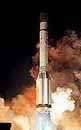
Behind Lockheed Martin's new joint InterSputnik venture lies a brilliant marketing plan: maximum utilization of the company's A2100 spacecraft bus -as well as use of its contacts derived from working with the Russian government on the Proton launcher. And Lockheed gets the bonus of InterSputnik's existing 15 "parking spaces" in geostationary orbit, which just might prove to be the most valuable part of the deal.
The A2100 satellite bus, which will fly aboard the first in the InterSputnik launches, a Proton next year, is also the leading contender for selection as the Space-Based Infrared Satellite (SBIRS) system, a U.S. Defense Dept. early warning spacecraft constellation. In the SBIRS award, as in the case of the InterSputnik deal, LM is packaging the satellite bus with one of its launchers, with ground station control systems thrown in for a total "turn key" package. The company's massive size and aggressive marketing approach lead many analysts to suggest that InterSputnik's first forays into Eastern Europe and Western Russia will be but a prelude to offering a full telecommunication service package that may eventually include the U.S. as well as North and South America. -using their inheritedc InterSputnik space "spaces". The benefit of the Lockheed and Martin mergers is clear: adding the spacecraft with the launcher and now with orbital availability. A space business package that may prove hard to beat.
