
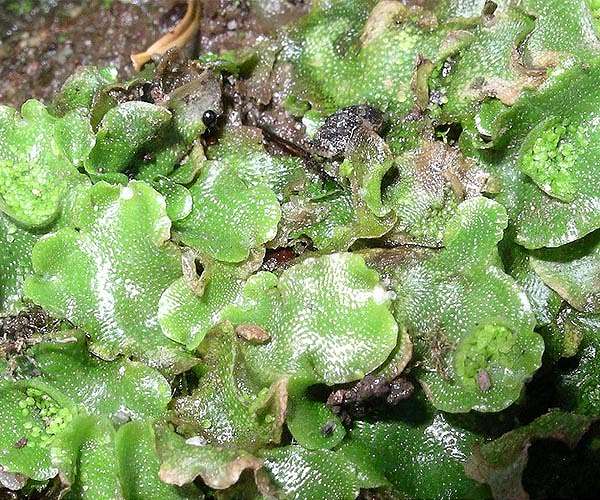
Kobe University researchers have uncovered the genetic basis behind vegetative and sexual reproduction in liverworts, potentially offering insights into increasing crop yields and enabling space-based agriculture. The study focused on the liverwort Marchantia polymorpha, a highly proliferative plant that reproduces through detachable gemmae and has proven ideal for genetic analysis.
Plant geneticist Kimitsune Ishizaki has spent the last decade establishing tools to manipulate the liverwort genome, citing its rapid regrowth as a reason for its nuisance status in gardens. The team previously identified a gene potentially involved in both vegetative gemma cup formation and sexual reproduction but its function remained unclear.
In a new study published in New Phytologist, the researchers describe a gene they named "SHOT GLASS." Mutant liverworts lacking this gene fail to form normal reproductive structures and sometimes produce malformed, cup-like organs. The team showed that SHOT GLASS enables proper reproductive development by suppressing air chamber formation in leaves and guiding essential reproductive factors to their correct locations.
The discovery extended beyond liverworts. The SHOT GLASS gene shares ancestry with similar genes in flowering plants that regulate branch growth via secondary meristems. Remarkably, inserting the liverwort SHOT GLASS gene into mutant flowering plants restored their growth functions, suggesting a shared reproductive mechanism across land plants.
These findings affirm liverworts as valuable model organisms for studying reproductive development. Ishizaki envisions even broader applications: "Liverworts don't need soil and can grow in fog cultivation systems. We're working on developing liverworts as direct food resources, possibly for use in space," he says. Additionally, the team is engineering liverworts for the sustainable production of bio-based chemicals, traditionally limited to bacteria and yeast.
Research Report:SHOT GLASS, an R2R3-MYB transcription factor, promotes gemma cup and gametangiophore development in Marchantia polymorpha
