
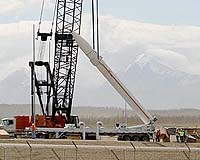
Last week's successful test of a U.S. Ground-Based Interceptor was a major step in America's "quiet neutralization" of China's nuclear deterrent, StrategyPage.com reported Sept. 5. StrategyPage.com analyst Harold C. Hutchison noted that the test in fact had a more modest goal than the one it successfully achieved.
"One thing to keep in mind is that this test was intended for data collection, not to test if the system could actually kill an incoming missile," he wrote. "The successful takedown was a bonus. The next test, intended to determine how well the system can pick out real targets from decoys, is slated for December. "
The U.S. Ground-Based Interceptor system is expected to expand to 18 deployed GBIs by the end of 2007, Hutchison wrote. The U.S. system "is already sufficient to have neutralized China's force of 24 DF-5" intercontinental ballistic missiles, he wrote.
"With the increased level of uncertainty about the success of the attack, China would very well decide not to launch the attack in the first place," Hutchison added.
Hutchison noted that the U.S. ballistic missile defense system is projected to deploy at least 38 ground-based interceptors by the end of 2009. This would give "the United States more interceptors than the combined Chinese ICBM and SLBM (submarine-launched ballistic missile) force," he wrote.
Hutchison added that the GBI force did not include the rapidly expanding force Standard Missile 3 interceptors that the U.S. Navy has deployed on board Aegis cruisers and destroyers. "At least 55 will be deployed by the end of 2009. China's force of ICBMs will be neutralized at that point," he concluded.
However, China still retained the capability to produce larger numbers of more advanced ICBMs in an effort to swamp the expensive, high-tech U.S. BMD system with them, he added. "China is building a new generation of ICBMs, and may decide to produce large numbers of them," he wrote.
Source: United Press International
