
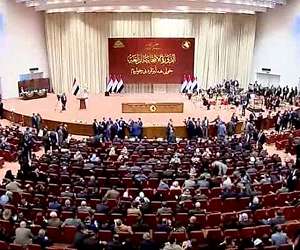
A spike in unrest accompanying Iraq's failure to form a government is scaring people from passing on much-needed intelligence and deterring refugees from returning home, a general and diplomats said Wednesday.
The remarks from the commander in charge of US troops in Baghdad and UN officials were the latest sign that the current stalemate, which has seen no new government formed since elections in March, is increasingly harming stability in the country.
Levels of violence in Iraq are unlikely to decline until a new government is formed and attacks by insurgents are dissuading local citizens from passing on information on insurgents, Brigadier General Ralph Baker said.
"It's our assessment these attacks are designed to intimidate the public and to also attack the Iraqi security forces to create the perception that the Iraqi security forces somehow are weak or ineffectual in their abilities to challenge these insurgent groups," he told reporters.
His office said that the past week alone had seen nine rocket attacks in Baghdad, compared to 12 in the previous three weeks and an average of around 2.5 per week this year.
Speaking at the US military's Victory Base Camp on Baghdad's outskirts, Baker said he expected the current level of violence to "stay at a sustained level", adding he believed that once a government was formed, "you'll see the level of violence that's been occurring over the last couple of months wane."
"The longer we have gone without seating a government, we see the level of confidence starting to wane amongst the citizens," he said, citing a relationship between people's confidence in the government and the security forces, and their willingness to share information on insurgents.
"I would argue that that level of confidence is not to the degree where they're supporting insurgent groups anymore, but that they are essentially fence-sitting.
"And when they do that, the tendency to share that kind of information that the security forces need to be highly effective diminishes somewhat."
The March elections have produced an inconclusive result in which no single bloc achieved a parliamentary majority, and coalition negotiations since have yet to yield a result leading to the formation of a government.
Figures released by local officials put July and August as two of the deadliest months here since 2008, though US forces disputed the July figures saying overall fatalities were in fact much lower than Iraqi data showed.
Meanwhile UN diplomats told a news conference in Baghdad's heavily-fortified Green Zone that the stalemate has also dissuaded refugees from returning home in recent months.
Average monthly returns of refugees outside the country and internally displaced persons had been between 15,000 to 20,000 in the 18 months before the elections, but that figure has dropped to around 10,000 since.
"What we see is that during these six months, the number of returns really has gone down quite considerably," said Walter Kaelin, the representative for the UN Secretary General on the human rights of internally displaced persons.
"People are waiting (to see) what is going to happen," he said.
Daniel Endres, Iraq representative for the UN High Commissioner for Refugees, added that 45 percent of refugees questioned by UN staff at Iraq's borders with Syria and Jordan said they did not want to return permanently because of political uncertainty.
A further 15 percent said they would not return because of the security situation, he said, adding that the remaining 40 percent mostly said basic services were inadequate.
Endres said there are around 1.52 million internally displaced persons in Iraq, of whom around 500,000 lived in squatter camps.
Share This Article With Planet Earth
