
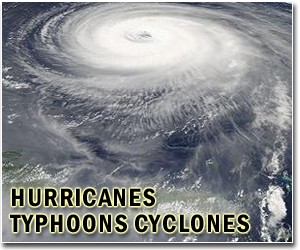
Some key facts on Severe Tropical Cyclone Yasi, which lashed Australia's populous northeast coast on Thursday:
– Yasi roared into the Australian coast at around 1400 GMT Wednesday at Mission Beach, between the cities of Innisfail and Cardwell, which lie in a heavily populated agricultural and tourist region near the world famous Great Barrier Reef.
– Buildings, trees and power cables in coastal towns including Cardwell and Tully suffered massive destruction, but no deaths or injuries were reported after the storm that forecasters had warned was the most "life-threatening" cyclone "in generations." Officials said they "breathed a sigh of relief."
– It was upgraded to category five ferocity on a scale of five as it neared the coast on Tuesday. Category five cyclones are classed as "extremely dangerous" by meteorologists and bring "widespread destruction." They are equivalent to Beaufort scale 12 hurricanes.
– Yasi, the most powerful cyclone to hit Australia in a century, packed winds of 290 kilometres (181 miles) per hour across a front that was hundreds of kilometres wide, with a seething eye measuring about 35 kilometres in width.
– It brought with it driving rains and treacherous storm surges of more than six metres (20 feet) that swamped coastal towns, hurling boats two blocks inland in Cardwell.
– Tens of thousands of people fled their homes in seaside areas ahead of the storm's impact, as officials warned locals not to take any chances. Tourists flew out of the region in droves before Yasi arrived.
– Yasi began as a tropical low off Fiji, 3,500 kilometres (2,200 miles) east of Australia last week, and intensified to a Severe Tropical Cyclone as it swept across the Coral Sea to northeastern Queensland state
– The main body of the storm sprawled across some 500 kilometres before it struck, with the associated weather fanning out for 2,000 kilometres. Local media estimate it would cover the entire United States or large parts of Europe.
– Yasi was Thursday moving westwards over the Queensland outback after it was downgraded to a category two storm, but officials warned its effects will be felt in the impact zone for hours.
– It was moving as far inland as the outback mining town of Mount Isa, some 900 kilometres from the coast, where it was expected on Friday
Share This Article With Planet Earth
