
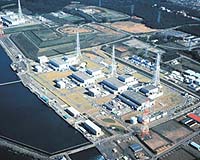
The world's largest nuclear plant will on Friday receive formal approval to resume operations, two years after it was shut down following a strong earthquake off the Japanese coast, the local government said.
Northern Niigata prefecture, where the Kashiwazaki-Kariwa plant is located, will officially inform operator Tokyo Electric Power Co. (TEPCO) that it may restart one of seven reactors at the 8,200-megawatt facility, an official said Thursday.
Many local residents and some geologists have voiced safety concerns, but Niigata Governor Hirohiko Izumida told the local assembly on Thursday: "I want to give approval to TEPCO to restart the operation."
TEPCO spokesman Jun Oshima said: "Once the company receives the official go-ahead, it can immediately start preparing test operations. The company will shift to full power generation after up to 50 days of test operations."
The sprawling plant has been dormant since July 2007 when a quake measuring 6.8 on the Richter scale struck about 60 kilometres (40 miles) offshore in the Sea of Japan (East Sea), killing 15 people and injuring thousands.
Public concern mounted when television footage showed white smoke coming from an electric transformer, while the operator said radioactive water had leaked into the ocean during the tremor.
TEPCO said the contamination was far below levels that could harm people's health, but it also reported that more than 400 barrels holding contaminated waste had toppled over, with at least 40 spilling their contents.
Izumida has been cautious about giving his official approval because of concerns among local residents, which were heightened by a series of nine fires TEPCO reported inside the dormant facility, the most recent being last month.
Share This Article With Planet Earth
