
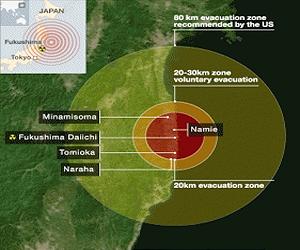
A "frustrated" US wanted to place nuclear experts in the prime minister's office in Tokyo after the Fukushima disaster last year but Japan refused citing sovereignty fears, a minister said Sunday.
"There was a request from US Ambassador (John) Roos that they hoped to station their nuclear engineers at the prime minister's office" to help deal with the crisis, Yukio Edano, chief cabinet secretary at the time, told a parliament panel on the nuclear disaster.
"But from the viewpoint of Japan's sovereignty, I declined to accept the offer," said Edano, who is currently the industry minister.
Edano was replying to a question by a member of the panel, who cited US documents that showed a Washington offer to make engineers available on-hand for then Prime Minister Naoto Kan was refused by the Japanese side.
The offer was made on March 14, three days after the 9.0-magnitude quake that caused a tsunami and crisis at the Fukushima nuclear plant.
About 19,000 people were left dead or missing after the record quake-tsunami. Kan stepped down five months later, partly over criticism of his handling of the aftermath of the triple disaster.
"The Americans were visibly being frustrated, and I was frustrated, too, as arrangements to share any information (on the unfolding nuclear crisis) were not going very well," Edano said. "Then there was the offer."
After the proposal was rejected, US nuclear experts advised Japanese officials but did not directly participate in the frenzied efforts to stabilise the reactors at the Fukushima plant, where there were several blasts.
A Japanese media report said Tokyo first turned down an offer from the United States, a close ally, to provide technical support for cooling fuel rods at the reactors immediately after the disaster.
Since then, the US has provided aid including the deployment of a Marine unit specialising in emergency nuclear response.
It also mobilised more than 20,000 personnel and some 160 aircraft for disaster-relief operations.
The panel session on Sunday focused on why the government was slow to activate emergency vents that would have saved the nuclear plant from devastating hydrogen explosions.
It also questioned why Kan's administration was slow to disclose vital information on areas hit by radiation.
The panel will question Kan on Monday, before concluding a report next month.
