
A Japanese court on Friday refused to shut down a nuclear power plant, rejecting a plea by residents who fear radiation if a major earthquake strikes.
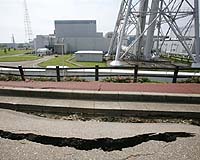
An earthquake in July damaged the world's largest nuclear power plant northwest of Tokyo, which leaked tiny amounts of radiation and remains shut for inspections.
Residents near the separate Hamaoka nuclear power plant south of Tokyo filed a lawsuit demanding its suspension, noting that their region was at high risk for earthquakes and voicing fear that it would expose them to radiation.
But the Shizuoka District Court ruled that the plant, run by Chubu Electric Power Co., had sufficient safeguards.
"The plant has a quake-resistant structure based on carefully considered simulations of big earthquakes," Judge Akira Miyaoka said.
The plaintiffs pledged to appeal.
"This court decision ignores the danger of setting up and operating nuclear power plants in Japan, a country that experiences lots of quakes," said a lawyer for the plaintiffs.
"We'll never bend to this unfair ruling. We pledge to keep fighting until we get the suspension," he said, as seen in television footage which did not give his name.
Japan experiences about 20 percent of the world's major earthquakes.
The July 16 earthquake which damaged the giant Kashiwazaki-Kariwa plant registered 6.8 on the Richter scale and killed 14 people, although none of the deaths were linked to the nuclear facility.
A team from the UN International Atomic Energy Agency inspected the plant and concluded that damage was limited and did not affect the reactors' safety.
