
An Israeli military base in Haifa buzzed with activity on Sunday as a Cypriot police aircraft touched down and a landing British military helicopter stirred up dust nearby.
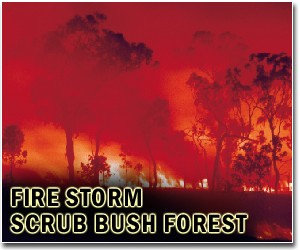
The tiny base next to the city's Mediterranean port was transformed into a hub for a massive international effort to snuff out a blaze which killed 41 people and ravaged millions of trees.
Up until the announcement after dark on Sunday that the inferno in the Carmel forest near the city in northern Israel was finally under control, the crews at the Haifa base showed no signs of slowing down.
British Flight Lieutenant Euan Johnson and his crew landed their grey Griffin helicopter, which spent three days scooping sea water from the Mediterranean and dispersing it over the enormous blaze.
The fire was the worst in Israel's 62-year history, and forced the Jewish state to reach out to foreign nations. Assistance came quickly, with at least 16 countries offering aircraft, personnel or materiel.
Johnson and his crew — six pilots and a civilian engineer — made the short trip from the RAF base at Akrotiri on the south coast of Cyprus to join the battle from its early stages.
They were shocked by the strength of the fire, which erupted on Thursday morning and swept through dry woodlands, killing more than 40 people, most of them on a bus trapped in the racing flames.
"It's certainly one of the biggest fires, in terms of area, that I've personally ever dealt with," Johnson told AFP.
"Having spoken to colleagues of mine on the same squadron, they say they've dealt with fires covering a bigger area, but nowhere near the same intensity," he said.
Elias Savva, a Cyprus police captain, was aboard a helicopter which made one of the first sorties over the fire as it burned out of control on Friday morning.
"It was really, really bad the first day," he told AFP, exiting the yellow and blue police helicopter.
"It was scary, it was scary knowing what we had seen and heard on the news. It was very emotional, very touching because we heard about the bus, we heard about the people."
By Sunday afternoon, as the tide turned, Johnson said his crew was ready to stay on "until we are no longer needed."
Many Israelis — whose country does not have firefighting planes of its own — have been asking why their government was not better prepared after an extended, dry summer and a string of smaller forest fires.
But Savva said any nation would have been caught off-guard by such a fire.
"Nobody is fully prepared for such things," he said. "I think (Israel) is well equipped as a country, but still nobody can expect a fire of this size in a small country like this."
Share This Article With Planet Earth
