
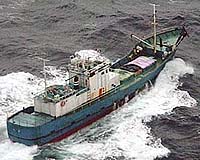
Automatic vessel monitoring for regulated fisheries is an important growth market for Iridium. Several Service Partners have developed Iridium-based Vessel Monitoring Systems (VMSs) that permit shore authorities to track the location and activity of fishing vessels in protected fisheries.
Iridium's global satellite coverage, including the important fishing grounds in the Arctic and Antarctic regions, and robust short-burst data (SBD) links provide an efficient, effective means for fishing fleets to meet current and future regulations for fisheries worldwide.
The Faria WatchDog VMS recently received type approval from the Pacific Island Forum Fisheries Agency (FFA) for its 16 member countries, the National Fishery Authority Papua New Guinea and the Australian and New Zealand Fishery Agencies, as well as the Norwegian Directorate of Fisheries.
Faria WatchDog is also type approved by the National Oceanic and Atmospheric Administration (NOAA) for all U.S. fishery regions.
The Faria WatchDog VMS is a dual-mode transceiver product that uses the Iridium satellite network for position reporting and GSM data links when working in range of shore towers.
The unit provides text messaging, mandated VMS position reporting and activity code declarations, catch and notification forms, and e-mail as well as automatic transmission of required VMS data information to fishery authorities.
Zunibal S.A. has introduced an Iridium-enabled VMS product that meets the latest revised regulations recently published by the Spanish government for commercial fishing vessel tracking.
The new Zunibal ZVMS77 shipboard VMS transponder uses Iridium's 9601 SBD modem to transmit the vessel's GPS position coordinates, speed, heading and status information at automatic intervals or in response to a polling request from the Spanish fishing authorities.
The shipboard device meets all of the technical specifications established for compliant equipment. Zunibal is a leader in applying satellite technology for the specialized needs of the tuna-fishing industry worldwide.
Collecte Localisation Satellite (CLS) (www.cls-halios.net) has developed an advanced VMS product that provides vessel tracking in compliance with international regulations and also meets emerging standards for electronic reporting systems (ERSs). The European Union (EU) will require approved ERS devices on commercial fishing vessels larger than 24 meters by Jan. 1, 2010, and vessels over 15 meters by Jan. 1, 2012. T
he ERS will replace the current manual record keeping with an electronic logbook, which is used to transmit catch, landing, sales and transshipment data to fishing authorities. The CLS Halios system provides both VMS and ERS functions in a single device. It is based on CLS' Thorium satellite data terminal, which uses the Iridium network to transmit and receive data.
Share This Article With Planet Earth
