
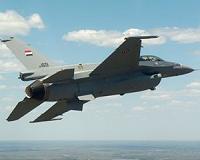
An Iraqi army plane went down Wednesday near Kirkuk, with the military blaming a technical problem but the Islamic State group claiming its fighters shot it down.
A high-ranking military source told AFP that the plane crashed during a reconnaissance flight near Kirkuk and that its three crew were considered missing.
The military source said authorities had launched a search for the crew after the Cessna 208 Caravan went down near Kirkuk, around 220 kilometres (135 miles) north of Baghdad.
In its combat version, the aircraft can be used to launch laser-guided Hellfire missiles.
The Islamic State jihadist group claimed in a statement posted on Twitter and a video released moments later that its fighters had shot the plane down, killing five crew members.
It said it used anti-aircraft artillery against a plane that had been on a bombing run against the city of Hawijah, a stronghold of the jihadists in Kirkuk province.
A video — which claims to show the moment the aircraft was shot down — released by the jihadist organisation shows the wreckage of a plane that could be a Cessna Caravan.
The footage also shows IS fighters celebrating around body parts, some of which are floating in a small canal.
Iraqi forces have been making gains against the jihadists in recent months as they seek to reclaim territory seized by IS during a major offensive in 2014.
Hawijah, like other IS bastions across Iraq, is increasingly isolated as federal, Kurdish and tribal forces slowly close in.
The pressure has mounted on anti-IS forces to flush the jihadists out of the Hawijah area after a chemical attack was launched from the nearby village of Bashir last week.
The suspected mustard agent attack on the Kurdish-controlled town of Taza killed a three-year-old girl and left hundreds of people complaining of burns and respiratory problems.
The town's residents have demanded government action to retake Bashir, which is visible from the main road between Baghdad and Kirkuk, but has remained in IS hands since 2014.
Military coordination between the Kurdish peshmerga fighters and the government-allied Shiite Turkmen militia groups that also operate in the area has been difficult, slowing any operation against the jihadists.
Prime Minister Haider al-Abadi has responded by promising that an operation against Bashir would get under way soon.
A senior military official in Kirkuk said that such an operation would further increase the pressure on Hawijah, which is IS's main remaining hub east of the Tigris.
IS shot down an Iraqi military helicopter on February 17, killing two crew members.
Two days earlier, an Iraqi Mi-17 helicopter crashed south of Baghdad due to a "technical problem", killing nine people.
Iraq cabinet warns Sadr protest camp 'illegal'
Baghdad (AFP) March 16, 2016 –
The Iraqi cabinet has decided not to authorise a protest camp by followers of cleric Moqtada Sadr which had been due to begin Friday in front of the fortified "Green Zone".
Tens of thousands of Sadr supporters have been preparing for a days-long sit-in in central Baghdad aimed at pressuring the government to implement deeper political reform.
"Staging a sit-in is not permitted by law, especially in the current security circumstances, notably the threat by terrorist groups and the potential for this gathering to be targeted," a cabinet statement said Wednesday.
"The security forces are busy with the fight against Daesh (Islamic State group) and it is not possible to guarantee the protection of this gathering at all times," it said.
The cabinet stressed that it "supports the demonstrations demanding government reforms" and has protected one-day protests by the Sadr movement in recent weeks.
The Najaf-based Sadr had urged his supporters on March 12 to prepare tents for a protest camp supposed to begin on Friday and last until the expiry 10 days later of an ultimatum he gave the government.
A month ago, the Shiite cleric gave Prime Minister Haider al-Abadi 45 days to present the names of technocrats for a new government.
Sadrists have held a series of massive rallies in central Baghdad, with thousands turning out last week for the latest protest to press their demands.
The presence a week earlier of armed Sadr supporters outside the Green Zone — where Abadi's office, parliament and the US embassy are located — sparked intense security concerns.
In the protest that he attended in Baghdad three week ago, Sadr threatened that his supporters could storm the Green Zone if their demands were not met.
