
Baghdad cautioned Monday against "an escalation" after a flurry of attacks on US interests in Iraq prompted Washington to warn of a "decisive" response against Iran.
Tehran wields growing influence in Iraq, particularly through armed factions.
Since October 28, ten rocket attacks have targeted areas where US soldiers and diplomats are stationed.
They have not been claimed, but the United States has blamed Iranian-backed Shiite paramilitary groups.
On Monday, US defence secretary Mark Esper "expressed his concern" over the strikes in a telephone call with outgoing prime minister Adel Abdel Mahdi, according to a statement from the premier's office.
In response, Abdel Mahdi "called on everyone to spare no effort to prevent an escalation that will threaten all parties", the statement added.
"Unilateral decisions will trigger negative reactions that will make it more difficult to control the situation and will threaten Iraq's security, sovereignty and independence," he said.
Abdel Mahdi, a close ally of Iran who also enjoyed cordial relations with the US, resigned in early December after the two months of unprecedented demonstrations in the capital and Shiite-majority south in which around 460 people have died.
Negotiations are under way to name his successor.
"If the Iraqi government or state weakens, this will exacerbate escalation and chaos," Abdel Mahdi told Esper, according to the statement.
Iran has gained overwhelming influence in Iraq since the 2003 US invasion brought down Saddam Hussein.
A US source recently told AFP that pro-Iran factions in Iraq were now considered a more significant threat to American soldiers than the Islamic State group (IS).
"Abdel Mahdi fears that an American response to the strikes… could turn into clashes on Iraqi soil," a senior Iraqi official told AFP on condition of anonymity.
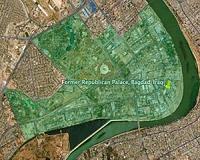
The attacks have killed one Iraqi soldier and left others wounded as well as causing material damage in the vicinity of the US embassy in Baghdad's ultra-secure Green Zone.
The US has recently reinforced its security at the embassy, according to an Iraqi security source, who said "a convoy of 15 American vehicles each transporting armoured trucks and weapons entered the Green Zone".
Top US diplomat Mike Pompeo on Friday warned Iran's leaders "that any attacks by them, or their proxies of any identity, that harm Americans, our allies or our interests will be answered with a decisive US response".
US officials say they are considering sending 5,000 to 7,000 troops to the region to counter Iran, although Esper on Friday again denied a report that a 14,000-strong deployment was under discussion.
No consensus yet on new Iraqi PM as deadline looms
Baghdad (AFP) Dec 16, 2019 –
Iraqi political parties struggled to reach a consensus on a new prime minister Monday amid unprecedented protests as the deadline for a parliamentary vote loomed.
Iraq's competing factions typically engage in drawn-out discussions before any official decision, but replacing outgoing premier Adel Abdel Mahdi has been further complicated by the scrutiny of the months-old protest movement that forced his resignation.
For over two months, Baghdad and the Shiite-majority south have been rocked by protests against the government and Iranian influence, rejecting in advance any politician from the "corrupt system" in place since the fall of Saddam Hussein in 2003.
The protest movement erupted on October 1 and was met with violent suppression, with some 460 people killed and 25,000 wounded to date.
Abdel Mahdi's resignation on December 1 was precipitated by a wave of violence against demonstrators and the intervention by top Shiite cleric Grand Ayatollah Ali Sistani, whose influence looms large in Iraqi politics.
Abdel Mahdi continues to carry out day-to-day government business pending the naming of a new premier.
In an official letter made public late Sunday, President Barham Saleh said he'd received a letter from the speaker of parliament accepting Abdel Mahdi's resignation "on December 4".
According to the constitution, parliament has two weeks to designate a new prime minister, making the deadline Thursday.
– Several names circulated –
In his own letter, Saleh asks parliament to tell him "what is the largest coalition" in the assembly, from which the new premier should theoretically come.
When naming Abdel Mahdi 13 months ago, parliament remained vague on the "largest coalition" and the premier was approved as soon as he was designated by Saleh.
The prime minister then formed his government with the support of two allies, now divided in their responses to the protest movement.
In one corner is the powerful Shiite cleric Moqtada Sadr, who holds the largest bloc in parliament and supports the protesters calling for an overhaul of the political system.
In the other is the bloc made up of veterans of the Hashed al-Shaabi pro-Iranian paramilitary group now integrated into Iraqi security forces. Making up the second largest bloc, they see the protest movement as the product of a foreign "conspiracy".
Several names have circulated, including 49-year-old Mohammed al-Soudani, a former minister and ex-governor of a southern province.
He has already been rejected by protesters, who demand an "independent" candidate.
Several sources told AFP Soudani's approval by parliament was "risky", with one saying "there is a big risk his candidature will be rejected".
Saleh "is betting on this rejection, so he can present the candidate of his choice" without needing parliament's approval, as the constitution stipulates, this source added.
Another complication in the negotiations is the unusual disassociation from the process of Sistani, 89.
While he has played kingmaker of Iraqi governments since 2003, Sistani said ten days ago that this time he intended to play "no role", only expressing a wish that the choice be made without "foreign interference".
