
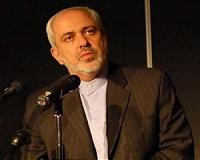
Iran's top diplomat on Friday praised the country's remaining partners in a landmark 2015 nuclear deal for their "will to resist" US pressure after Washington withdrew from the deal in May.
"What I noticed during this meeting is that all the members, even the three allies, have committed and have the political will to take action and resist the United States," Foreign Minister Mohammad Javad Zarif told a press conference, broadcast by Iran's Fars news agency, after talks in Vienna.
Three European nations along with Russia and China vowed at the meeting to keep the energy exporter plugged into the global economy despite the US withdrawal and threat of renewed sanctions, including on Iran's key crude oil exports.
The diplomats said they remained committed to the 2015 accord and to building up economic relations with Iran, including "the continuation of Iran's export of oil and gas" and other energy products.
"This is the first time they have shown this level of commitment, but we will have to see in the future what they really want to do and what they can do," Zarif said.
"If they continue to demonstrate the political will they showed today, they will get things done without any problem."
The foreign ministers agreed on an 11-point list of joint goals in the Austrian capital, where the accord was signed three years ago with the aim of reining in Iran's atomic programme in return for sanctions relief that promised greater trade and investment.
Iran has suffered worsening financial turbulence since US President Donald Trump abandoned the accord in May.
Washington has warned other countries to end trade and investment in Iran and stop buying its oil by early November or face punitive measures.
Iran disappointed with EU proposal on nuclear deal
Washington (UPI) Jul 6, 2018 –
The Iranian president said a European package of support for the U.N-backed nuclear agreement was disappointing and offered nothing beyond general commitments.
President Hassan Rouhani spent much of the week visiting European leaders to drum up support for the Joint Comprehensive Plan of Action, a 2015 agreement reached between the five permanent members of the U.N. Security Council, Germany and Iran. That agreement gave Iran relief from sweeping sanctions in exchange for peaceful nuclear commitments, though U.S. President Donald Trump this year said the deal was flawed and erased the U.S. signature.
That means some U.S. sanctions are reinforced next month. Sanctions reaching into the Iranian energy sector snap back in early November, though some European companies that have done business with Iran have already scaled back their operations.
"After the U.S. withdrawal from the JCPOA, economic issues and problems in banking relations and oil have been created and companies that have invested in Iran are skeptical about continuing their activities in Iran," Rouhani said after speaking late Thursday with German Chancellor Angela Merkel.
Iran's exports remain robust at around 2 million barrels of oil per day, though some of its clients have already started looking for other options.
European Commission President Jean-Claude Juncker said after Trump pulled out of the JCPOA in May there was a unified position in Europe that respecting the U.N.-backed agreement with Iran was essential for peace.
The announcement followed comments from Jean-Yves Le Drian, the French minister of European and Foreign Affairs, who said European parties have looked to 1990s rules that would protect French and other European companies from U.S. pressure. A financial mechanism that's "immune" to the U.S. dollar would secure European financial interests in Iran and ensure its oil can still be exported, he said.
Rouhani said he arrived home from his European tour with little to show for it in terms of concrete support.
"Unfortunately the proposed package lacked operational solution and specific method for cooperation, and featured just a set of general commitments like the previous statements by the European Union," he said in statements published through his official website.
Iran has supplied oil to the Asian markets as well. China in particular could be less constricted by U.S. sanctions pressures than its European counterparts.
Juncker in May said that by Aug. 6, when the first set of U.S. sanctions go into force, European companies could be protected by blocking statutes that allows them to recover damages and nullifies the effect of any judgment imposed by a foreign court.
According to Rouhani, Merkel made it clear that European leaders want to stay in the deal.
