
President Hassan Rouhani said Wednesday that Iran is ready to hold talks with the UN nuclear watchdog chief, ahead of a next week deadline set by lawmakers for the suspension of some inspections.
Rouhani stressed that Iran would not cease working with the International Atomic Energy Agency or expel its inspectors after the new measure takes effect next Tuesday.
Iran has notified the watchdog that it will suspend "voluntary transparency measures", notably inspection visits to non-nuclear sites, including military sites suspected of nuclear-related activity, if the United States has not lifted the sweeping sanctions then president Donald Trump reimposed in 2018.
The provision has stoked international concern about a possible expulsion of UN inspectors, in what would be a huge blow to confidence in the nuclear deal Iran struck with major powers in 2015.
But Rouhani's government has stressed repeatedly that it has no desire to see an end to inspections of its nuclear facilities and is ready to return to full compliance with the nuclear accord just as soon as Washington does so too.
"Foreign propaganda has started, saying that you are expelling IAEA inspectors. Why are you lying?" Rouhani said in televised remarks to his cabinet.
"Not only we will not expel (anyone), but even the IAEA's director has now requested to come to Tehran, and he can.
"If he wants to negotiate, he can negotiate," Rouhani said, emphasising that the new measure approved by parliament "is not about our nuclear activity being left uninspected".
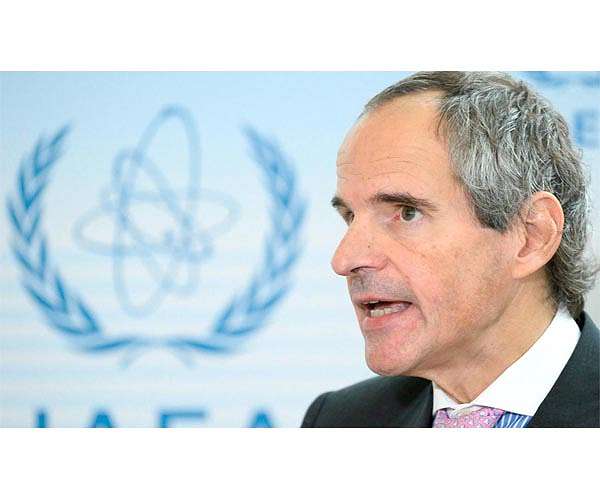
IAEA director Rafael Grossi suggested to member states on Friday that he visit Iran to try to find a "solution".
The new US administration of President Joe Biden has expressed readiness to return to the 2015 deal abandoned by Trump, but has called on Iran to return to full compliance first.
Tehran says it is ready to return to its commitments on condition that Washington does so first by lifting sweeping unilateral sanctions that have dealt a heavy blow to the Iranian economy.
Iran's supreme leader Ayatollah Ali Khamenei stressed Wednesday that that meant action and not just words from the Biden administration.
"The Islamic republic will not be satisfied this time with words and promises," he said in a televised speech.
"This time, only action, action. If we see action from the opposite side, we will act too."
Rouhani has said that if sanctions are lifted, Iran will need only "a few hours" to verify the move and "then we will return to our commitments."
Merkel voices 'concern' over Iran deal in Rouhani call
Berlin (AFP) Feb 17, 2021 –
German Chancellor Angela Merkel on Wednesday held a rare telephone call with Iranian President Hassan Rouhani in which she voiced her "concern" over Tehran's non-compliance with the 2015 nuclear pact, her spokesman said.
"She expressed her concern that Iran continues to fail to meet its obligations under the nuclear agreement," spokesman Steffen Seibert said in a statement.
The chancellor also said that "now was the time for positive signals that create trust and increase the chances of a diplomatic solution", he added.
The call came on the eve of crunch talks between three European countries and the United States on how to salvage the deal aimed at reigning in Iran's nuclear programme.
French Foreign Minister Jean-Yves Le Drian will host his German and British counterparts in Paris, with America's new top diplomat Antony Blinken joining via videoconference, the French foreign ministry said.
The three European signatories to the deal want to revive the agreement that former US president Donald Trump walked away from in 2018.
The administration of Trump's successor Joe Biden has said it could rejoin if Tehran returns to compliance.
Analysts have said that only a small window of opportunity remains to save the deal and world powers will have to act fast.
The West is concerned that violations of the accord mean Iran is moving faster towards having the "breakout" capacity for building an atomic bomb, while Iranian presidential elections in June add a major risk factor.
The Joint Comprehensive Plan of Action (JCPOA) was based on Iran providing safeguards that it would not make an atomic bomb, in exchange for a gradual easing of international sanctions.
But the return of sanctions after Trump left the deal prompted Tehran to retaliate by intensifying its nuclear work in repeated violation of the deal.
The UN nuclear watchdog said last week Iran had started producing uranium metal in a new violation of the accord, prompting the European powers to warn Tehran risks losing the chance of seeing the full benefits of the deal.
President Rouhani has said that if sanctions are lifted, Iran will need only "a few hours" to verify the move and "then we will return to our commitments".
