
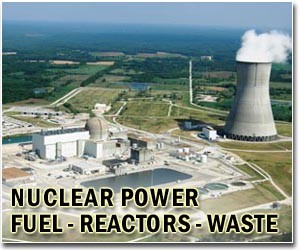
India's cabinet was expected Friday to discuss changing a bill on its civilian nuclear power industry, to increase the liability of foreign-reactor suppliers in the case of an accident.
The measure will help pave the way to putting into operation a landmark atomic pact with the United States signed in 2008 that ended India's nuclear isolation and reflected deepening ties between the world's largest democracies.
The cabinet meeting, to be chaired by Prime Minister Manmohan Singh, was to be held Friday morning, a government statement said.
The meeting was scheduled after a 31-member parliamentary panel earlier in the week proposed tripling the compensation cap in the event of a nuclear accident to 15 billion rupees (322 million dollars).
The amendments put forward by the multi-party panel also raises the possibility of claiming compensation in the event of a defect in nuclear equipment provided by private companies or if an accident stems from "gross negligence."
The Congress-led coalition was obliged to delay plans to seek passage of the bill following opposition demands for higher compensation than that initially proposed in the event of a nuclear accident.
The government has been working to get an agreement from other parties before introducing the bill in parliament.
Foreign companies are keen to tap the rich opportunities from India's plans to scale up its civilian nuclear power industry. Experts calculate India's civilian nuclear market is worth some 150 billion dollars.
French and Russian state-owned firms whose liabilities are underwritten by their governments have already signed a slew of deals to build power plants in energy-hungry India.
But US energy companies such as General Electric, whose liabilities are not underwritten by the US government, have been reluctant to conclude any nuclear deals with India until New Delhi passes legislation to cap accident liability. After the cabinet's approval, the proposed legislation is expected to be tabled in the current parliamentary session, which is slated to wind up at the end of the month.
Share This Article With Planet Earth
