
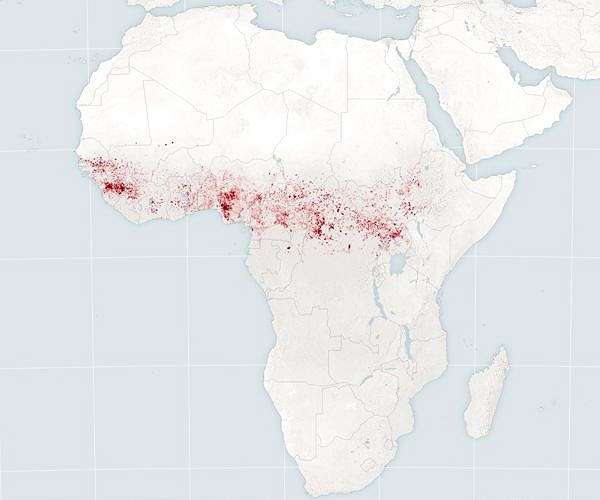
Recent research conducted by the University of Oklahoma provides a comprehensive analysis of fire activity in the tropical forests of west and central Africa, revealing a significant increase in wildfires over the past 18 years, particularly in the Congo Basin. The escalation is attributed mainly to rising temperatures, dry conditions, and human activities such as deforestation. The trend is expected to persist, aligning with current climate forecasts.
Similar trends have been observed in other wet forests globally, including those in the U.S. Pacific Northwest and the Amazon, suggesting a shifting paradigm in how these ecosystems are understood in terms of fire susceptibility.
Although fires in African wet forests have been known for some time, their smaller scale compared to those in dry woodlands and savannas has limited research focus. This study, led by ecologist Michael Wimberly, marks the first extensive examination of fire patterns in these regions, utilizing satellite data from 2003 to 2021 to track wildfire occurrences.
"Historically, scientists have not considered fire to be an important part of wet, tropical forests, but there's been work in the Amazon in recent decades that has suggested otherwise. We need to start thinking about wet forests as being susceptible to fires and considering fire an important impact of climate change in tropical forests," said Michael Wimberly, emphasizing a new perspective on fire dynamics in these ecosystems.
The study, published in Geophysical Research Letters, indicates a doubling of fire occurrences in areas like the Northwest Congolian Lowland Forests. It also highlights a strong link between fire activity and climatic factors such as high temperatures and vapor pressure deficit, a measure of plant water stress, especially during extreme weather events like the 2015-2016 "super El Nino."
The ongoing loss of forest cover and the fragmentation of remaining areas exacerbate the situation, creating more vulnerable forest edges where fires are prevalent. These edges tend to have drier microclimates and more invasive species, both of which contribute to higher fire risks.
The findings underscore the urgent need for fire management strategies that focus on these vulnerable forest edges to mitigate further damage and prevent the creation of harmful feedback loops where fire-damaged forests become even more prone to future fires.
"I was surprised at how strong and clear the climate signal was," Wimberly said.
"Tropical forest fires have been long overlooked, but they're only going to become more important in the future. We can't ignore them any longer," concluded Wimberly.
Research Report:Increasing fire activity in African tropical forests is associated with deforestation and climate change
