
China on Wednesday launched the Chang'e I, its first-ever lunar orbiter, as part of its quest to put a man on the moon by around 2020.
The following are the key events in China's space programme:
— 1956: China opens up its first institute on missile and rocket research.
— 1970: China launches its first satellite, the "East is Red I," aboard a Long March carrier rocket.
— 1975: China launches its first recoverable satellite, which returns to Earth after a three-day flight.
— 1985: China announces it will offer commercial satellite launch services for international clients.
— Early 1990s: China suffers a series of launch failures in its commercial satellite endeavours.
— 1992: China begins its Shenzhou programme aimed at sending a man into space.
— 1999: China launches the first flight in the Shenzhou series, an unmanned mission.
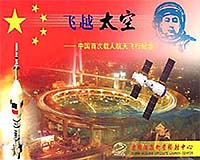
— 2003: Yang Liwei becomes China's first man in space on the Shenzhou V mission. He returns after 21 hours and 14 trips around the Earth.
— 2004: China launches 10 satellites in eight successful rocket launches, the most-ever in one year.
— 2005: The Shenzhou VI carries two men into space in the nation's second manned flight. They spend five days on their 3.25-million-kilometre (two-million-mile) mission in orbit.
— June 2007: China launches the 100th flight of its Long March series of rockets as it remains a major player in the area of global satellite launch services.
— Oct 24, 2007: China launches the Chang'e I, the first mission in its lunar programme.
