
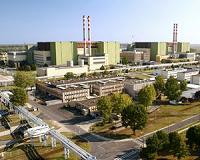
Hungary's parliament voted Tuesday to keep secret for 30 years details of contracts related to a controversial nuclear plant deal with Russia, a move critics said could shield corruption.
A planned upgrade of Hungary's sole nuclear plant, which provides 40 percent of the EU member's electricity consumption, is to be financed with a 10-billion-euro ($12-billion) loan from Russia.
The project to expand it is being carried out by Russia's state nuclear corporation Rosatom and has been seen as an example of Hungary's increasingly close ties with Moscow. Construction is due to start in 2018.
Tuesday's vote in parliament — with 130 in favour and 62 against — extends the period of classification from an originally planned 15 years to 30.
Hungarian Prime Minister Viktor Orban's Fidesz party argued the law is needed due to security concerns.
"Only technical and business details are classified for 30 years, which is appropriate for national security reasons," Fidesz said in a statement.
Several non-governmental organisations sent a letter to Hungary's president urging him to ask the Constitutional Court to review the law.
Opposition parties argued it has always been possible to classify sensitive information and that the law is designed to hide corruption.
"Raising the period of classification from 15 to 30 years means that those who pushed Hungary into this escapade will not be held accountable," Bernadett Szel, co-leader of opposition party LMP, told AFP.
Critics also argue that the law exempts supply contracts from public procurement procedures.
The European Commission, the EU's executive body, has said it is reviewing whether the contract with Rosatom to expand the Paks plant is in line with the bloc's rules on public procurement and state subsidies.
