
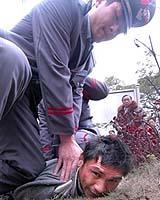
Human rights conditions in China "deteriorated significantly" in 2006 as the government reacted to rising social discontent with even tighter controls, Human Rights watch said on Thursday. In its annual global report, the New York-based group said China focused particularly on silencing a loosely organised network of lawyers, journalists and activists seeking justice for victims of official abuses.
In several high-profile cases, rights defenders last year sought to defend victims of widespread illegal land seizures, police abuses, and forced abortions under the one-child policy.
China moved to silence such critics with vague charges such as "disrupting social order" or "inciting subversion", the report said.
It said around 100 activists, lawyers, writers, academics, HIV/AIDS campaigners and other human rights defenders were targeted last year, "indicating a new crackdown".
"Several high-profile politically motivated prosecutions of lawyers and journalists in 2006 put an end to any hopes that President Hu Jintao would be a progressive reformer and sent an unambiguous warning to individuals and groups pressing for greater respect for the fundamental rights and freedoms of Chinese citizens," the report said.
China continued to use unofficial house arrests and other forms of extra-legal treatment in order to avoid the negative international attention triggered by outright arrests, it added.
China also made increased use of administrative and professional pressures to muffle opponents, such as rules introduced in March requiring lawyers pursuing sensitive cases to take directions from local judicial authorities who are "often themselves party to the disputes", it said.
China's rapid economic growth has coincided with a surge in protests and other bursts of social discontent, often by people displaced in land seizures perpetrated by developers in collusion with government officials.
The group also noted that China moved to plug remaining holes in its system of Internet censorship, known as the "Great Firewall of China", which top officials have justified as necessary for national stability.
Source: Agence France-Presse
