
The human brain is uniquely tuned to appreciate music, according to a new study.
"We found that a certain region of our brains has a stronger preference for sounds with pitch than macaque monkey brains," neuroscientist Bevil Conway, an investigator at the National Institutes of Health's Intramural Research Program, said in a news release. "The results raise the possibility that these sounds, which are embedded in speech and music, may have shaped the basic organization of the human brain."
The idea for the new study came while Conway was working at MIT. Conway and Sam Norman-Haignere, a post-doctoral fellow at Columbia University's Zuckerman Institute for Mind, Brain, and Behavior, were trying to identify differences in the way monkey and human brains manage vision. They didn't have much success.
Norman-Haignere was also studying hearing in the laboratory of Josh H. McDermott.
"I told Bevil that we had a method for reliably identifying a region in the human brain that selectively responds to sounds with pitch," Norman-Haignere said.
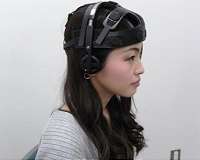
The two researchers decided to compare how human and monkey brains control hearing. For the study, Conway, Norman-Haignere and their colleagues played a series of harmonic sounds for healthy volunteers and monkeys. Functional magnetic resonance imaging allowed the researchers to monitor the participants' brain activity.
Researchers also played toneless sounds that matched the frequencies of the harmonic sounds.
The brains of both monkeys and humans showed similar levels of neural activity in response to non-harmonic sounds. But the neural patterns showed humans were more sensitive to tonal sounds.
"We found that human and monkey brains had very similar responses to sounds in any given frequency range. It's when we added tonal structure to the sounds that some of these same regions of the human brain became more responsive," said Conway. "These results suggest the macaque monkey may experience music and other sounds differently. In contrast, the macaque's experience of the visual world is probably very similar to our own. It makes one wonder what kind of sounds our evolutionary ancestors experienced."
When scientists repeated the experiment using sounds that contained natural harmonies for monkeys, including macaque calls, they got the same results. The researchers published their findings this week in the journal Nature Neuroscience.
"This finding suggests that speech and music may have fundamentally changed the way our brain processes pitch," said Dr. Conway. "It may also help explain why it has been so hard for scientists to train monkeys to perform auditory tasks that humans find relatively effortless."
Surfing brings healing for wounded US veterans
Huntington Beach, United States (AFP) June 6, 2019 –
Wounded US veterans are taking part in an unusual kind of offensive this week dubbed "Operation Surf," which is aimed at offering them a form of therapy and some healing.
More than two dozens vets, some who have lost limbs during warfare, and active-duty military personnel have signed up for the annual weeklong program in Huntington Beach, south of Los Angeles.
"It's very therapeutic and much needed," said Jordan Sisco, who lost both legs after stepping on a mine while deployed in Afghanistan in 2014.
"You know, being trapped in your head all the time, it's nice just to come out here and just kind of focus on one thing. That thing is just enjoying yourself," he added, sporting a broad smile after surfing a few dozen meters on his own.
The free event is sponsored by Amazing Surf Adventure, which launched "Operation Surf" 10 years ago after helping a wounded veteran learn to surf to overcome the pain and mental trauma of war.
"A lot of our military heroes are trained not to surrender, and the very first thing that we tell them is: 'You have to surrender to the elements, you have to trust me as a surf instructor, I've got your back'," said Danny Nichols, one of the instructors and a former professional surfer.
Participants, who receive food, hotel accommodations and travel assistance, begin the program on shore by going through the security basics and learning how to ride a wave and maintain balance.
After that, everyone goes into the water, with some carried on the backs of instructors and others wheeled onto the beach.
Each veteran is paired with an individual instructor and a volunteer.
Lifeguards on jet skis also keep a close watch and help the veterans manoeuver over the waves.
– 'Get a clear mind' –
"The beautiful thing about surfing is that you can do it standing up, you can do it sitting down, you can do it laying down," said Nichols. "There is no right or wrong way to do it.
"You're riding a wave and it really comes down to the person that's having the most fun is winning."
Eric Ellis, a burly veteran who lost a leg after being wounded, says the program offers a respite from the realities of daily life.
"I'm here just to get away from life, for real," he said, hopping on one leg towards the sea. "That's what it is. Get things out of your mind, get a clear mind. That is what all this is for."
Thanks to the program, some 500 wounded veterans or active-duty military members have benefited from "Operation Surf" since it was launched in 2009.
The US Marine Corps also offers "ocean therapy" to help soldiers overcome post-traumatic stress disorder and depression.
The American Navy meanwhile has invested $1 million to study how beneficial surfing can be.
According to Kristen Walter, a clinical research psychologist from the Naval Health Research Center in San Diego, research has shown that there are immediate benefits of surf therapy on mental health.
"The state of science suggests that there are psychological benefits that improve over time," Walter said at a conference on the subject. "It's possible that surf therapy can complement traditional treatment."
