
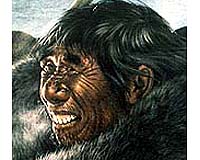
Romanian and U.S. scientists have found evidence modern humans and Neanderthals interbred as Homo sapiens spread across Europe 35,000 years ago. The findings are based on ancient human bones recovered from a Romanian cave, National Geographic News reported, and add to the mystery of why Neanderthals eventually became extinct.
Some scientists argue Neanderthals were slaughtered or out-competed by ancestors of modern humans, but NGN said the new research, suggests a more intimate relationship, with Neanderthals becoming absorbed into the human race through interbreeding.
A member of the U.S. team, Washington University anthropologist Erik Trinkaus, said although the remains are largely typical of modern humans, they also show some distinctly Neanderthal skeletal traits, including the shape of the lower jaw and the back of the skull.
Trinkaus told National Geographic News those features are extremely unlikely to have come from earlier modern humans but very likely have come from Neanderthals.
The team found that the fossils were 30,000 years old and principally have the diagnostic skeletal features of modern humans.
They also found that the remains had other features known, among potential ancestors, primarily among the preceding Neandertals, providing more evidence there was mixing of humans and Neandertals as modern humans dispersed across Europe about 35,000 years ago. Their analysis of one skeleton's shoulder blade also shows that these humans did not have the full set of anatomical adaptations for throwing projectiles, like spears, during hunting.
Source: United Press International
