
Hong Kong's multimillion-dollar art museum M+ will open Friday without dissident artist Ai Weiwei's "middle finger series", highlighting concerns over creative freedom as authorities censor criticism in the city.
The 65,000-square-metre (700,000-square-foot) venue on Hong Kong's Victoria Harbour waterfront aims to rival Western leaders in contemporary art curation, such as London's Tate Modern and New York's Museum of Modern Art.
After years of delay, senior officials from both the Hong Kong and Chinese governments cut the ribbon on Thursday.
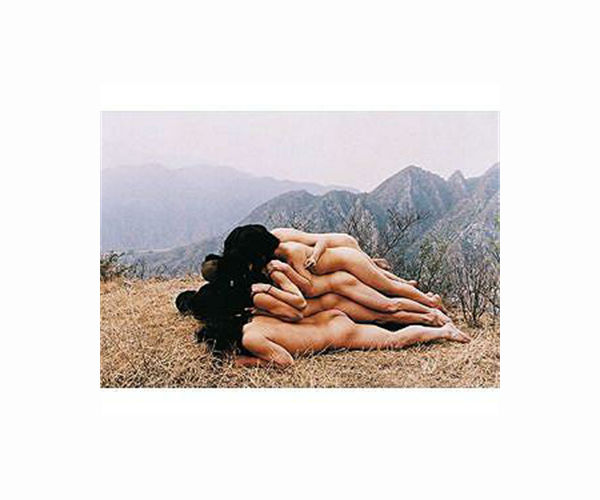
But a photo series by Chinese artist Ai in one of the museum's collections will not be on display.
In the series, Ai is showing his middle finger to institutions around the world, including the White House, Germany's Reichstag — and Beijing's Tiananmen Square.
"Artistic expression is not above the law," said Henry Tang, the official in charge of the cultural park where the museum is located.
"We won't show the middle finger photos but we will show Ai Weiwei's artwork," Tang told reporters on Thursday.
Earlier this year, pro-Beijing politicians said Ai's photo of Tiananmen Square in the series was a "national security threat".
This prompted Swiss collector Uli Sigg, whose massive donation to M+ included Ai's series, to issue an open letter that said "there is a different understanding in much of China — and obviously in parts of Hong Kong society… of what contemporary art is about".
Tang confirmed that the photo had been censored and M+ welcomed vetting by the police's national security unit.
"If there are any works that the national security department thinks… violated the law, we will act according to the law," Tang said.
Censorship at M+ is not the only indication that freedom of expression in Hong Kong's once-vibrant arts scene is declining.
Insiders say self-censorship had been on the rise in recent years, but the broad wording of Hong Kong's national security law — and the fervour with which influential pro-Beijing figures wish to see it applied — added an extra layer of risk.
The law, passed in June last year, targets anything deemed "secession, subversion, terrorism or collusion with foreign forces" and has quickly criminalised a host of political views.
Last month, Hong Kong passed a toughened film censorship law, empowering authorities to ban past films over "national security" threats and impose stiffer penalties for any breaches.
Hong Kong's 'Captain America' protester jailed over slogans
Hong Kong (AFP) Nov 11, 2021 –
A Hong Kong man known as "Captain America 2.0" for carrying the superhero's shield at protest rallies was sentenced to more than five years in jail on Thursday for chanting slogans promoting Hong Kong's independence from China.
Ma Chun-man, a 31-year-old food delivery driver, was convicted last month by a judge of trying to separate the city from China by chanting slogans and displaying placards, as well as through interviews with reporters.
It is the third national security case to come to trial since Hong Kong authorities began wielding a sweeping new law to snuff out dissent.
China imposed the national security law on the city last year in response to massive democracy protests, a move that has brought mainland-style speech curbs to the once outspoken business hub.
Hong Kong's first national security trial took place in July when former waiter Tong Ying-kit was sentenced to nine years in jail for terrorism and secession after he rode his motorbike into police while flying a protest flag.
But the latest trial is more of a legal weathervane because — much like the vast majority of upcoming national security trials — the offences do not involve a violent act and revolve instead around what someone has said.
Stanley Chan, one of the judges specially chosen by the government to try national security cases, said Ma's offence was no less serious than Tong's.
"It's hard to guarantee that other people incited by him won't become another Ma Chun-man," the judge said.
"Whether he used violence, whether he defied the law enforcers, whether his ideas got others' recognition – all these are not important," Chan added.
The slogans Ma is said to have chanted included "liberate Hong Kong, revolution of our times" and "Hong Kong independence, the only way out".
In a handwritten letter to the court, Ma called himself "a man with no dream" who found inspiration last April in pro-democracy rallies at shopping malls.
Ma pleaded not guilty to the charges. "I am not ashamed or regretful of what I have done," he wrote.
Amnesty International called the sentence "outrageous" and said restrictions on freedom of expression in Hong Kong were "dangerously disproportionate".
"The Hong Kong government must stop endlessly expanding its definition of 'endangering national security' as a means of locking up people who express views it doesn't like," said Amnesty's deputy secretary general Kyle Ward.
