Greenpeace activists scaled three smoke stacks at a Shell operation Saturday in their latest action protesting the exploitation of Canada's vast oil sands.
Nineteen activists from Canada, France, Australia and Brazil occupied part of an upgrader Shell is building at its Scotford site in Fort Saskatchewan, Alberta to convert oil sands into fuel, the group said in a statement.
Two protesters were detained in their attempt "to expose more of the climate crimes of the tar sands and send a climate SOS to the world," Greenpeace said.
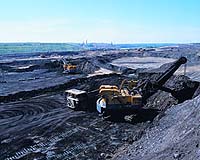
Producing tar sand oil takes more energy and emits more greenhouse gases than exploiting liquid oil wells.
Shell said it was working with police and that government authorities had been notified of the activists' illegal break-in.
"We reiterate our wish that Greenpeace and all others who have concerns with our activities would talk to us face to face instead of using confrontational and unsafe tactics," the company said in a statement.
It said no construction was underway at the site at the time and production was not affected.
Greenpeace warned it would multiply its interventions ahead of key UN-sponsored climate talks in Copenhagen this December.
The well-publicized actions especially target Prime Minister Stephen Harper's Conservative government, which is seeking to lower targets for greenhouse gas emissions, citing national economic concerns.
"The tar sands represent the bleak future that awaits the world if we refuse to listen to science and fail to make significant commitments to cut greenhouse gas emissions," said Greenpeace climate and energy campaigner Mike Hudema.
The sit-in was the third in recent months by Greenpeace in the eastern Canadian province.
On September 30, activists occupied two conveyor belts used to transfer bitumen from an open pit mine to a processing plant owned by Canada's Suncor. Two weeks earlier, Greenpeace briefly had stopped operations at a nearby Shell oil sands mine.
At an estimated 175 billion barrels, Alberta's oil sands are among the largest in the world behind Saudi Arabia, but they were neglected for years, except by local companies, because of high extraction costs.
Since 2000, skyrocketing crude oil prices and improved extraction methods have made exploitation more economical.
Share This Article With Planet Earth