
Last Christmas, for the first time in its existence, a ski resort in the French Alpine town of Montclar could count neither on Mother Nature nor its artificial snow machines to produce enough of the white stuff to cover its pistes.
Instead, it had to use a helicopter, at great cost, to bring snow from the high peaks of the Alps to lower, warmer altitudes where, unusually, there was no natural ski cover.
The predicament came as a shock for the small community that relies heavily on the snow for its survival, not just for this season but as a portent of things to come as climate change wreaks havoc with temperatures.
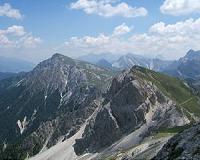
The Alps are particularly exposed to the ravaging effects of global warming.
According to the International Commission for the Protection of the Alps (CIPRA), temperatures in the mountain range have risen by nearly two degrees Celsius (3.6 degrees Fahrenheit) in the past 120 years — almost double the global average, and will continue on the same upward trend.
The WSL Institute for Snow and Avalanche Research in Davos, Switzerland, warns on its website of increasingly common "green Christmases" in the Alps, with stations below an altitude of 1,300 metres most affected.
"The vast majority of stations are seeing a clear reduction in the number of days with snow-covered ground, regardless of their altitude or location," it said.
The Montclar ski station sits at 1,350 metres.
Every year the snowfall recedes to higher and higher altitudes from about 1,200m in the 1960s to around 1,500m today.
"The cold spells are getting shorter and shorter," resident snowmaker Bruno Farcy told AFP while steering his snow groomer over the slopes, filling holes and adjusting the curvature of the pistes to make sure they are exposed as little as possible to the sun's melting rays.
– 'Difficult choice' –
With snow in short supply, nothing can be left to chance in the battle against the thermostat.
"That's why the trend is moving towards investments, to increase the instant production capacity, in order to be able to cover the whole area in as much snow as quickly as possible," said Farcy.
Montclar was among the first resorts, already in the 1980s, to install artificial snow guns to augment nature's gift.
Today, the resort boasts an impressive network of snow-spouting "guns" that kick in automatically if the temperature drops to under minus two degrees Celsius (28.4 F), as well as transportation pipes and storage tanks.
But even all this was not enough during this unseasonably warm winter. No snow had fallen on the pistes in time for the crunch Christmas skiing season, and it was too warm to operate the snow guns.
"We considered all options, tipper trucks, tractors..," said Alain Quievre, who runs the company that manages the resort's ski lifts.
In the end, they rented a helicopter to bring natural snow down from an altitude of 2,000m, a "difficult choice" given concerns for the environmental impact, he added.
The operation lasted three hours and required 400 litres of petrol — about 0.7 percent of the station's annual fuel consumption, said Quievre, while underlining that "at stake were the jobs of 50 fulltime and 43 seasonal workers."
– Fake is the future –
Dressed in the red, padded jumpsuit of the ski school, Lionel Haud wonders aloud about the wisdom of the 10,000-euro investment he made a few years ago in the resort, which is owned by a number of private investors, including employees, local merchants and even customers.
He is a glass half-full kind of man.
"We have to prepare for the future, that's for sure. There's warming, there's no denying it. But there's always snow at higher altitudes," said Haud.
"I've been here for 25 years and I have known many bad seasons. But now, with snowmaking, that's over."
Such adaptation is not without risk, however.
Last year the regional accounting chamber cautioned against more spending on Montclar's fake snow future, judging further investment in snow-making equipment and an extra chair lift untenable.
Already, the community was having trouble repaying loans on previous improvements, which happened at the expense of other, much-needed municipal improvements such as new pavements.
Scientists caution that artificial snow-making is not good for the environment either, as it uses massive amounts of water and energy.
Looking to a future, some are shifting to summer skiing, hiking and cycling, which currently make up only a small part of the income of traditional winter sport resorts.
"Initially, everyone will be able to make it even at low altitudes because the variability of the snow cover means that there will still be years when there is snow," said climatologist Christophe Chaix of the Agate research agency, who focuses on Alpine adaptation to warming.
"If we gain one degree, 1.5 degrees, two degrees within 30 years, then it will become very complicated at low altitudes. So they will have to have started diversifying already."
Snow problem for Japan's ice sculpture festival
Sapporo, Japan (AFP) Feb 10, 2020 –
Every year, tens of thousands of tourists flock to the snow festival in the northern Japanese city of Sapporo, attracted by some 200 large, but intricate ice sculptures.
But this year, there's a problem: no snow.
With high temperatures that festival-goers put down to climate change, organisers were forced to truck in powder from distant towns for their signature sculptures in an unheard-of ice crisis.
"This lack of snow is unprecedented," said Yumato Sato, an official in charge of organising the snow festival, which normally uses 30,000 tonnes of the stuff for sculptures ranging from anime characters to famous racehorses.
"We had to bring in snow from places we had never reached out to before" such as Niseko, a town about 60 kilometres (40 miles) away from Sapporo famous for its skiing, he said.
Adding to the problem was the need for pristine snow, perfect for sculpting.
"The snow needs to be free of dirt, otherwise the sculptures can break up," he said.
"We barely managed to scrape together enough snow."
Record low snowfall in Japan this year has also forced many ski resorts to shut their pistes. According to Weathernews, one quarter of the 400 resorts surveyed had been unable to operate.
There has been a knock-on effect on one of the snow festival's main attractions — a 100-metre-long, 10-metre-high slide — that had to be reduced in size.
– 'Once before I die' –
Snowfall in Sapporo has been less than half the annual average, according to the Japan Meterological Agency's local observatory. High temperatures melted the snow in mid-December and the mercury is expected to stay above average.
This posed a major challenge for the 125 local Self-Defense Forces troops who painstakingly construct the sculptures each year that can be as high as 15 metres, according to commanding officer Colonel Minoru Suzuki.
"Due to record warm weather this year, we didn't have much snow and the snow contained more water which made the statues melt easily," Suzuki told AFP.
His troops spent about 100 days planning and building a 15-metre tall, 20-metre wide statue modelled on the palace at Lazienki Park in Warsaw to commemorate the 100th anniversary of Japanese-Polish diplomatic relations in 2019.
"We had to keep repairing the statue so we struggled. It was difficult to attach parts because it was so warm," he added.
The festival has been running for 70 years and is a major tourist magnet, drawing 2.7 million visitors last year.
Sunao Kinoshita, a 75-year-old who had travelled up from near Osaka, said he "had to see it once before I die".
"Northern Japanese cities have been hosting snow festivals every year. It would be a shame if such events ended" due to global warming, he said.
A regular festival-goer from the region also laid the blame on global warming. "I was worried the climate was different this year," Ayaka Muto, 31, told AFP.
"Usually we have more snow. I think it's strange. I feel global warming is happening," added Muto.
– 'Serious and a disaster' –
The main theme of this year's festival, which runs until February 11, is the ethnic Ainu minority in Hokkaido, as the first Ainu-themed national museum, nicknamed Upopoy or "singing together" in the Ainu language, will open in April.
"We've never before had statues with such powerful Ainu characteristics," Sato said.
One statue featured a giant Blakiston's fish owl spreading its wings watching over sculptures of the museum and a ship. The owl is considered a god in Ainu culture.
Another statue was based on the Ainu myth of a thunder god and a forest princess.
And some have been turning to the nature gods of Japan's native Shinto religion to pray for more snow.
In mid-January, a ski resort in western Hyogo prefecture invited a Shinto priest to hold a ceremony to ask the gods for snow, as did the organisers of the Yamagata snow festival in northern Japan.
"It's not that we don't have enough snow. We don't have snow at all. It's serious and it's a disaster," Hyogo Governor Toshizo Ido told reporters last month.
The Sapporo festival organisers hope they can continue the famed event in the future despite the warming climate.
"This year marked the 71st event. It's a festival that we want to carry on for future generations," Sato said.
"(But) this is about weather so all we can do is to pray."
