
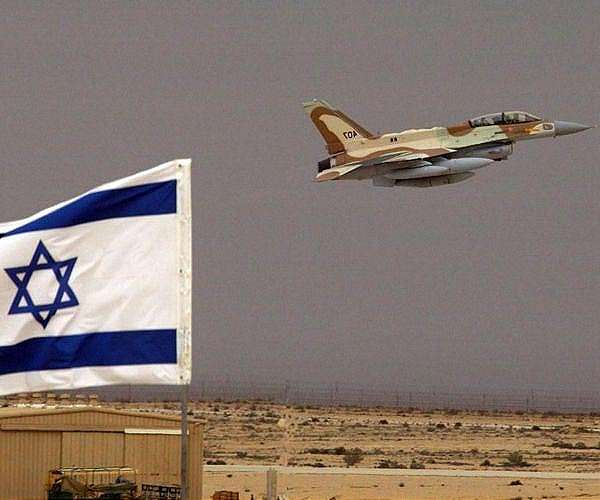
Israeli air strikes hammered the Gaza Strip pre-dawn Monday, after a week of violence between the Jewish state and Islamist militants left more than 200 people dead as international calls for de-escalation went unheeded.
Overnight Sunday to Monday, Israel launched dozens of strikes in the space of a few minutes across the crowded coastal Palestinian enclave controlled by Islamist group Hamas, according to AFP journalists at the scene.
The strikes caused widespread power cuts and damaged hundreds of buildings, local authorities said. No casualties were immediately reported.
West Gaza resident Mad Abed Rabbo, 39, expressed "horror and fear" at the intensity of the onslaught.
"There have never been strikes of this magnitude," he said.
In a statement just before 2:00 am (2300 GMT Sunday), the Israeli army said its fighter jets were "striking terror targets in the Gaza Strip".
Gazan Mani Qazaat said Israeli Prime Minister Benjamin Netanyahu "should realise we're civilians, not fighters".
"I felt like I was dying."
The renewed strikes come a day after 42 Palestinians in Gaza — including at least eight children and two doctors, according to the health ministry — were killed in the worst daily death toll in the enclave since the bombardments began.
In total, 197 Palestinians have been killed in Gaza, including at least 58 children, and more than 1,200 wounded since Israel launched its air campaign against Hamas on May 10 after the group fired rockets. The heaviest exchange of fire in years was sparked by unrest in Jerusalem.
In Israel, 10 people, including one child, have been killed and 282 wounded by rocket fire launched by armed groups in Gaza.
– 'Legitimate' –
Israel's army said about 3,000 rockets had been fired since last Monday from Gaza towards Israel — the highest rate ever recorded — but added the Iron Dome anti-missile system had intercepted over 1,000.
Netanyahu said in a televised address Sunday that Israel's "campaign against the terrorist organisations is continuing with full force" and would "take time" to finish.
The Israeli army said it had targeted the infrastructure of Hamas and armed group Islamic Jihad, including a vast tunnel system, weapons factories and storage sites.
Israeli air strikes also hit the home of Yahya Sinwar, head of Hamas's political wing in Gaza, the army said, releasing footage of plumes of smoke and intense damage, but without saying if he was killed.
Balls of flame and a cloud of debris shot into the sky Saturday afternoon as Israel's air force flattened a building housing Al Jazeera and AP news agency, after giving journalists an hour to evacuate.
Netanyahu on Sunday said the building also hosted a Palestinian "terrorist" intelligence office.
"It is a perfectly legitimate target," he said.
– Inter-communal clashes –
The violence between Hamas and Israel is the worst since 2014, when Israel launched a military operation on the Gaza Strip with the stated aim of ending rocket fire and destroying tunnels used for smuggling.
The war left 2,251 dead on the Palestinian side, mostly civilians, and 74 on the Israeli side, mostly soldiers.
Opening the first session of the UN Security Council on the renewed violence on Sunday, Secretary-General Antonio Guterres called the fighting "utterly appalling".
"It must stop immediately," he said.
But the UN talks, already delayed by Israel's ally the United States, resulted in little action, with Washington opposing a resolution.
President Joe Biden's administration says it is working behind the scenes and that a Security Council statement could backfire.
Israel is also trying to contain inter-communal violence between Jews and Arab-Israelis, as well as deadly clashes in the occupied West Bank, where 19 Palestinians have been killed since Monday, according to a toll from Palestinian authorities.
Major clashes broke out at the Al-Aqsa mosque compound — one of Islam's holiest sites — on May 7 following a crackdown against protests over planned expulsions of Palestinians in the Sheikh Jarrah neighbourhood of Israeli-annexed east Jerusalem.
Sheikh Jarrah has been at the heart of the flareup, seeing weeks of clashes between Palestinians and Israeli security forces.
On Sunday, a car-ramming attack in Sheikh Jarrah wounded seven police officers, police said, adding that the attacker had been killed.
Police also said "a number of suspects" had been arrested during clashes in another east Jerusalem neighbourhood overnight Sunday to Monday.
Guterres warned the fighting could have far-reaching consequences if not stopped immediately.
"It has the potential to unleash an uncontainable security and humanitarian crisis and to further foster extremism, not only in the occupied Palestinian territory and Israel, but in the region as a whole."
Deadly flare-up between Israel and Palestinians
Jerusalem (AFP) May 16, 2021 –
Israel and the Palestinians are mired in their worst violence in years in which Islamist groups have fired rockets and Israel has pounded Gaza with air strikes.
Here is a recap:
– Palestinian eviction threat –
On the evening of May 3, clashes erupt in the Sheikh Jarrah neighbourhood of Israeli-annexed east Jerusalem, sparked by a years-long bid by Jewish settlers to take over Arab homes.
On May 6, Britain, France, Germany, Italy and Spain urge Israel to end its settlement policy in the occupied Palestinian territories and expulsions from east Jerusalem.
– Clashes at Al-Aqsa compound –
Major clashes break out on May 7 as tens of thousands of Muslim worshippers pack the revered Al-Aqsa mosque compound — a site also holy to Jews as the Temple Mount — to pray on the last Friday of the holy month of Ramadan.
Israeli police say Palestinians hurl stones, bottles and fireworks at officers, who fire rubber-coated bullets and tear gas.
Video footage shows Israeli forces storming the mosque's plaza and firing sound grenades inside the building.
Clashes erupt over the following days in other parts of east Jerusalem.
On May 10, hundreds of Palestinians and 32 Israeli police officers are wounded in renewed clashes, mainly in the mosque compound.
The violence coincides with what Israel calls "Jerusalem Day", marking its 1967 seizure of the city's eastern sector.
More than 700 Palestinians are wounded in the violence at Al-Aqsa and other parts of east Jerusalem over several days.
– Israel-Hamas escalation –
On the evening of May 10, the Islamist movement Hamas, which controls the Gaza Strip, launches volleys of rockets towards Israel, which responds with deadly strikes on the Palestinian enclave.
The next day, Hamas rains rockets down on Tel Aviv after an Israeli air strike destroys a 12-storey Gaza City building where senior Hamas officials are said to have offices.
– Riots in mixed towns –
On the evening of May 11, unrest flares in mixed Jewish-Arab towns.
Israel declares a state of emergency in Lod, near Tel Aviv, after police report rioting by some Arab residents following the death of an Arab Israeli.
Up to 1,000 border police are called up as reinforcements. More than 400 people, Jews and Arabs, are arrested.
– Build-up near Gaza –
On May 12, the US says it is rushing an envoy to Israel and the occupied territories while Russia calls for an emergency meeting of the Middle East Quartet — the European Union, Russia, the United States and the United Nations.
The next day, Israel masses armoured vehicles and troops along the border with Gaza. The defence ministry gives the army the green light to mobilise thousands of reservists if needed.
On May 14, Israel continues to pound Gaza.
The next day, an Israeli air strike on a building in the Shati refugee camp kills 10 members of an extended family — two mothers and their four children each.
Hours later another strike flattens a 13-floor building housing Qatar-based Al Jazeera television and the US news agency the Associated Press in the Gaza Strip.
After that raid, Prime Minister Benjamin Netanyahu tells US President Joe Biden that Israel is doing its utmost to safeguard civilians during its Gaza bombing campaign.
Biden expresses his "grave concern" over the flare-up in violence.
The White House also says it has cautioned Israel about the importance of protecting independent media.
– West Bank clashes –
Demonstrations across the occupied West Bank have led to clashes with the Israeli army, leaving 11 Palestinians dead on May 14 alone and more than 150 wounded, according to health officials and medics.
– Israel destroys Hamas leader's home –
On May 16, Israel says strikes destroyed the home of Hamas' political leader in Gaza, while medics said raids across the territory left at least 42 dead, the highest daily death toll.
UN chief Antonio Guterres appeals for an immediate end to the "utterly appalling" violence, but a virtual meeting of the Security Council results in no joint statement.
A car-ramming attack wounded several people including six police officers in the flashpoint Sheikh Jarrah neighbourhood of annexed east Jerusalem, police said, adding that the attacker was "neutralised".
Since Monday, the death toll has risen to 192 in the crowded coastal enclave of Gaza, including at least 58 children, and to 10 in Israel, according to authorities on each side.
Israel's army says some 3,000 rockets have now been fired from the coastal strip controlled by Hamas.
