
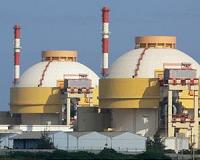
The first unit of the Russia-designed Kudankulam nuclear power plant (NPP) was connected to the grid, a source in the Indian nuclear industry said on Monday. In early February, the unit has been stopped for inspection over the signal of a possible malfunction.
"Today, at 8.15 a.m. [02:45 GMT], the first unit of the Kudankulam NPP has been connected to the grid. Now the station generates 300 MW of energy, a gradual rise in power continues," the source told RIA Novosti.
The construction of the Kudankulam nuclear power plant was initially agreed by the Soviet Union and India in 1988, but the project was in limbo until the Nuclear Power Corporation of India and Rosatom relaunched the much-delayed joint project in 2012.
Kudankulam's first unit reached full capacity in July 2014, and is currently India's most powerful reactor with a maximum operating capacity of 1,000 megawatt.
The second unit is nearing completion and is expected to be launched this year. The construction of the third and the fourth units is planned for 2016
earlier report
Russia, India Discuss Construction of Third,Fourth Units at Kudankulam NPP
Russia and India have discussed nuclear cooperation and the construction of third and fourth units at Kudankulam nuclear power plant (NPP), Russia's nuclear giant Rosatom stated Friday.
The talks were held in Mumbai on Thursday and involved Rosatom Deputy Director General Nikolai Spassky, Chairman of the Atomic Energy Commission of India Ratan Kumar Sinha and other representatives of the Indian nuclear industry.
Russian and Indian representatives focused on the commissioning of the first two units of Kudankulam NPP and the construction of the second stage (the third and fourth units) of the plant, Rosatim said in a press release.
India signed a contract with the Soviet Union in 1988 for the construction of two nuclear reactors. The agreement is now implemented by NIAEP (Atomstroyexport), a subsidiary of Russia's Rosatom.
The plant's first two units use VVER-1000 reactors and have an electric capacity of 1,000 megawatts. The first unit at Kudankulam reached capacity last July and was connected to the country's power grid in October. The nuclear fission in the second unit has been postponed until March 2015.
In May, both sides signed a general framework agreement for the construction of a third and fourth unit at the nuclear power plant.
