
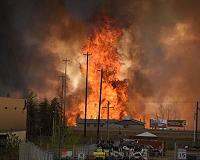
The first convoys of weary, anxious residents returned to wildfire-ravaged Fort McMurray on Wednesday, a month after they were forced to flee the Canadian oil city due to the inferno.
Physically exhausted and worried about what had become of their homes, the returnees were welcomed by a giant Canadian flag tied to the ladders of two firetrucks and billboards that read "Together we will rebuild" and "We are here, we are strong."
"To the people of Fort McMurray heading home — we will be with you every step of the way," Prime Minister Justin Trudeau said in a Twitter message.
By midday 7,500 people — about half the number expected — had returned in an initial wave, their vehicles packed with food, water, gasoline and other necessities, after being told to expect supply shortages.
The rest of the nearly 100,000 forced to evacuate the city and surrounding villages on May 3 are scheduled to follow in staggered caravans over the next two weeks, officials said.
"You have shown tremendous courage in the most difficult of circumstances, and you will need every ounce of that courage in the days to come because the road ahead is still a long one," Alberta Premier Rachel Notley said.
"Today is not the end of the story," she told a televised press conference. "It is not a return to normal life and it is not yet a celebration. There is still a lot of work to recover and rebuild (the city)."
Abandoning hotels, campsites and emergency shelters that housed them over the last month, the first returnees took to the road starting as early as 5 am (1100 GMT), as soon as police brought down barricades, an AFP journalist witnessed.
Police monitored traffic flows and ambulances were put on standby along the mostly barren 500-kilometer (310-mile) highway from the provincial capital Edmonton to Fort McMurray.
As they trickled back, returnees found a devastated community that will take years to rebuild, littered with burnt-out dwellings and surrounded by scorched forests.
Streets normally lined with pickup trucks are now eerily quiet. Lights shine from unoccupied homes after electricity was restored.
The downtown was unscathed and most city services have been restored, except potable water. Most stores have restocked.
Three hard-hit neighborhoods, however, have been fenced off by a 30-kilometer (19-mile) enclosure. The few homes undamaged by the fires there were deemed unsafe for habitation this week after tests of air, soil and ash revealed chemical and heavy metal contamination.
On the edge of seared trailer park, a deer was spotted just after dawn prancing back into the blackened forest.
Elsewhere, a man carried boxes and luggage from his truck into his undamaged home, while a few blocks away another man inspected a charred shed in his backyard. The flames had miraculously stopped a few feet from his house.
The fire continues to burn but has moved away from populated areas, and grew only minimally in the last few days to more than 580,000 hectares (1.4 million acres).
Some 1,700 firefighters, including teams from South Africa and the United States, continue to battle the blaze, assisted by water bombers and heavy equipment.
Smoke has largely dissipated in the city, raising local air quality to safe levels.
But Fort McMurray returnees were urged to wear rubber boots, masks and clothing that covers arms and legs when cleaning up to avoid coming into contact with contaminated ashes.
People with respiratory problems, the elderly and children under seven years old were asked to delay returning until at least June 21, when the local hospital will be fully operational.
Fort McMurray experienced rapid growth in recent decades as oil sands production to the north expanded, attracting workers from across Canada and around the world.
But it fell on hard times last year due to the oil rout, when prices tumbled from $100 to less than $50.
Area oil sands facilities are scheduled to bring production back online by week's end.
Companies have reported no damage to oil sands infrastructure, but were forced to cut production by 1.2 billion barrels per day after evacuating workers as a precaution.
Canada is the world's fifth largest petroleum producer.
