
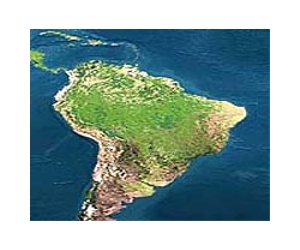
Agricultural exports from Latin America and the Caribbean to mostly East Asian markets are behind a strong recovery under way in the region, the Food and Agriculture Organization said.
Meanwhile, AsiaInspection.com, which represents the quality-control industry, said in a news release that Chinese imports specifically were behind recovery trends witnessed worldwide.
The FAO report, issued during the ongoing regional conference on food, cited advances made by Latin American and Caribbean economies and outlined areas for potential growth through 2010.
The recovery is driven mostly by farm exports, particularly to Asia, which have helped to relaunch Latin American agriculture economies, FAO said.
Economic improvements driven by exports have also created jobs and stimulated the labor market, said the organization.
In a warning against complacency, FAO cited challenges that still faced the economies. The exports would need to be sustained over a long period for the recovery to take effect, FAO said.
Livestock breeding was an area that required caution. Currently on the increase at 4 percent per year, double the world rate, livestock breeding would be difficult to maintain at its current rate of 41 percent of global beef exports.
Sustainable agriculture and livestock development was an area still not understood by most farming communities that are currently enjoying the spurt in export revenues.
Deforestation and soil erosion resulting from indiscriminate farming methods is an area requiring a more intelligent approach, analysts said.
During the conference, which ends Friday, countries will define FAO's priorities for Latin America and the Caribbean on food and agriculture.
FAO's Regional Representative for Latin America and the Caribbean Jose Graziano da Silva said the organization will present to its member countries a program, featuring specific policies aimed at small farmers, that seeks to transform this sector into a vital part of the solution to rural poverty that will also reduce dependence on food imports.
FAO is proposing that governments support small farmers by implementing actions to boost domestic basic food markets, increasing small farmers' productivity and implementing risk management strategies.
Some of these measures have already been put in place by countries as a response to soaring food prices and the idea is to improve them and make them permanent, FAO said. The program is critical to facilitating sustainable economic recovery throughout the region that is not tied to seasonal surges in exports.
Share This Article With Planet Earth
