
French Foreign Minister Jean-Yves Le Drian warned Iran on Wednesday that its plan to increase its uranium enrichment capacity took it close to a "red line", as Europe sought to protect its companies from a nuclear standoff between the US and Tehran.
Iran confirmed Wednesday that it was in "preparatory works" to restart nuclear activities in the event that a 2015 accord with world powers on limiting its atomic programme falls apart.
In such a scenario, Iran could "restart its activities without any limits," Iran's ambassador to the International Atomic Energy Agency Reza Najafi told reporters on the sidelines of a meeting of the IAEA's board in Vienna.
The announcement piled pressure on France, Britain and Germany, who are scrambling to save the deal after the US sensationally pulled out a month ago.
Le Drian called Iran's announcement that plans to boost its enrichment capacity "inopportune".
"It is always dangerous to flirt with red lines," he said, while emphasising that these plans did not constitute a breach of the accord.
The deal, which offers sanctions relief in return for guarantees that Tehran would not be able to build an atomic bomb, is hanging by a thread after the US announced plans to restore sanctions, diminishing the incentive for Iran to remain on board.
Tehran has put the ball in Europe's camp, demanding it come up with an economic package to offset the effects of the US withdrawal.
"The bottom line is that unless Tehran sees some benefits, it is unsustainable to continue limiting its nuclear programme, which is civilian in their eyes," Ellie Geranmayeh, Iran analyst for the European Council on Foreign Relations in London, told AFP.
"In practice it will revert back to the sanctions years when it had no restrictions."
Le Drian warned Tehran that Europe would not be able to stand idly by if Iran takes its nuclear programme "to the next level".
"The Iranians must realise that if they violate the accord they will face new sanctions," he told Europe 1 radio.
A spokesman for the German foreign ministry also described the plan as "not helpful at this time" saying it did not "contribute to the building of trust, in which Iran should also have an interest."
– Protecting European investments –
Apart from the risk of a nuclear-armed Iran, Paris, Berlin and London also fear the fallout of the showdown for European companies which invested in the country since 2015.
The US has threatened them with reprisals if they remain in Iran after it re-imposes sanctions on the country.
France, Britain, Germany and the EU on Wednesday sent the US a joint official request "to exempt European businesses doing legitimate trade in Iran from all extraterritorial American sanctions".
In the letter to US Treasury Secretary Steven Mnuchin and Secretary of State Mike Pompeo they warned that "secondary sanctions" by the US on European companies could jeopardise Europe's ability to uphold its end of the deal.
Several multinationals, including French oil giant Total and Danish shipping group Maersk, have already announced they will pull out of Iran once the sanctions are fully reimposed, unless they receive explicit exemptions from Washington.
French automaker PSA also said it would pull out of two joint ventures to sell its cars in Iran to avoid the risk of punishing US fines.
The European Commission said Wednesday it had updated a rarely-tested legal mechanism intended to provide legal cover to European companies in the face of US sanctions.
Officials acknowledged however that the mechanism known as the blocking statute may prove ineffective, especially for multinationals with a significant presence in the US.
Analysts point to the $9-billion fine handed to French bank BNP Paribas in the US in 2015 for sanctions-busting in Sudan, Cuba and Iran as an example of what could await European companies.
Macron walks fine line as Netanyahu seeks anti-Iran front
Paris (AFP) June 5, 2018 –
French President Emmanuel Macron meets Israeli Prime Minister Benjamin Netanyahu on Tuesday on the second leg of his European trip amid deep differences over how to contain Iran's ambitions in the Middle East.
It will be the third meeting of the two leaders in Paris since last July, and while they agree on the threats posed by Tehran's missile projects and foreign interventions, they differ strongly on the response.
Netanyahu has pursued his strident attacks against Tehran during his visit to Europe, warning during a stop in Berlin on Monday that its activities risked fuelling a new influx of migrants towards Germany.
Iran was intent on fuelling "a religious war inside Syria and the consequences will be many, many more refugees and you know where exactly they will come," he told German Chancellor Angela Merkel.
Netanyahu has been emboldened by US President Donald Trump's decision to pull out of the 2015 accord curbing Iran's nuclear programme — and the threat of harsh sanctions against European firms doing business in the country.
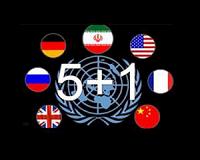
Yet Macron has led a staunch defence of the accord, whose other signatories — France, Britain, Germany, China, Russia and the EU — have maintained a common front so far.
"Benjamin Netanyahu's goal is to not find himself isolated along with Washington," said David Khalfa of the Institute for European Prospective and Security in Paris.
"At a minimum he's looking to force Europeans to reinforce the existing accord" via the US sanctions, but also the prospect of joint Saudi-US-Israel bloc setting the agenda in the Middle East, Khalfa said.
Macron has warned that letting the deal fall apart will only inflame tensions, especially if harsh sanctions smother the economic relief Iranians began to enjoy after it was signed in 2015.
He and Netanyahu are scheduled to hold a press conference after their talks and launch a season of cultural exchanges between their countries this year.
– Balancing act –
But relations have been further strained by the killing of 123 Palestinian protesters in Gaza by Israeli forces since March, including at least 61 people on May 14 alone.
Macron denounced the "violence by Israel's armed forces" even as he noted the country's security concerns, a position deemed too simplistic by Israeli officials while also being derided by his leftwing critics in France.
French Prime Minister Edouard Philippe cancelled a planned trip to Israel last month.
Several pro-Palestinian groups are planning protests against Netanyahu in cities across the country, while three journalist unions have called his visit "intolerable".
The journalist unions denounced the killing of Palestinian journalists by Israeli forces, as well as women, children and people working for emergency services in Gaza.
Against this backdrop, talks on seeking an end to the Palestinian conflict have fallen to the wayside, not least after Trump broke with decades of protocol by recognising Israel's claim of Jerusalem as its capital.
Last week, the European Union urged Israel to reconsider its decision to demolish a Palestinian Bedouin village in the occupied West Bank, saying it undermines "prospects for a lasting peace".
Macron has announced plans to visit both Israel and the Palestinian territories this year.
"Macron is taking a very pragmatic approach, separating the Israeli-Palestinian conflict from their bilateral cooperation," said Khalfa, noting in particular Macron's appreciation of Israel's push to become a "start-up nation".
Macron and Netanyahu are also planning to inaugurate a show highlighting Israel's technological innovations, "Israel@lights", at the Grand Palais museum in Paris.
