
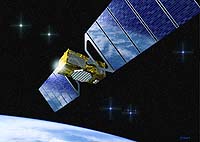
The European Union failed on Tuesday to break a deadlock over how to fund the bloc's ambitious but troubled Galileo satellite network in the face of German opposition to the funding scheme.
EU transport ministers meeting in Luxembourg set an end of the year deadline to work out just how to finance Europe's answer to the United States' popular Global Positioning System, after a public-private arrangement unravelled earlier this year.
The European Commission published proposals last month to pay for the project mainly with unspent money intended for farm subsidies from the EU's joint budget, rather than tapping member states up for the extra cash.
However, German Transport Minister Wolfgang Tiefensee maintained Berlin's opposition to the plans with Germany keen that funding should come from member states whose companies are involved in th eproject.
In the absence of greater convergence on funding, member states contented themselves with agreeing that Galileo is a "key project for the European Union" in conclusions from the meeting.
On the question of financing, the ministers simply noted "that the commission considers that public procurement of a full operational capability of Galileo by 2013 would require additional public funding."
Officials at the meeting tried to cast Galileo's prospects in a positive light despite the deadlock.
"These conclusions express the will to take steps so that Galileo can be built and is in service in 2013," EU Transport Commissioner Jacques Barrot said, conceding however that "there is still a lot of work to do".
"We have every reason to be optimistic," Portuguese Transport Minister Mario Lino told a news conference.
Work on Galileo, supposed to be a showcase for Europe's technical prowess, has stalled as cost over-runs pile up, the private contractors bicker and member states push their own industrial interests.
With the 30-satellite network project needing an extra 2.4 billion euros (3.4 billion dollars), the commission proposed last month to use 1.7 billion euros in 2007 and 500 million euros in 2008 from money earmarked for EU farm subsidies, but which are not needed because of high commodities prices.
The rest of the needed money would come from unspent money budgeted for running the EU's institutions.
The ministers will have another chance to narrow their difference at the end of November and if that does not settle the matter then it will have to be dealt with at an EU summit of heads of state and government in mid-December.
