
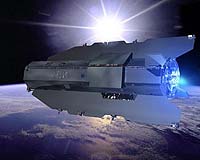
ESA announced Tuesday it has chosen a shortlist of new Earth Explorer proposals. The six satellite missions would cover a range of environmental issues with the aim of furthering understanding of Earth and its changing climate:
BIOMASS – taking global measurements of forest biomass. ESA would employ satellite P-band synthetic aperture polarimetric radar, from which forest biomass data can be retrieved. Researchers also have proposed using multi-polarization measurements and interferometry to enhance the estimates.
TRAQ – monitoring air quality and long-range transport of air pollutants. The mission would focus on the rate of air-quality changes on regional and global scales, the strength and distribution of sources and sinks of tropospheric trace gases and aerosols influencing air quality, and the role of tropospheric composition in global change. Instrumentation would consist of imaging spectrometers sensing from ultraviolet to short-wave infrared.
PREMIER – the study of climate change in the upper troposphere and lower stratosphere. The objective is to understand the many processes that link trace gases, radiation, chemistry and climate in the atmosphere, concentrating on the processes in the UTLS region.
The mission would link MetOp and National Polar-orbiting Operational Environmental Satellite System data, and attempt to provide useful insights into processes occurring in the lower troposphere. The instrumentation consists of infrared and microwave radiometers.
FLEX – Global remote sensing of photosynthesis through the measurement of fluorescence. Photosynthesis by land vegetation is an important component of the global carbon cycle.
It is closely linked to the hydrological cycle through transpiration. Currently there are no direct measurements available from satellites of this factor. The mission’s instruments would measure high spectral resolution reflectance and temperature.
A-SCOPE – Observing CO2 with a Differential Absorption Lidar for a better understanding of the global carbon cycle and regional carbon dioxide fluxes, as well as greenhouse gas emissions. The aim is to provide a spatially resolved global carbon budget. Instrumentation includes a fluorescence imaging spectrometer.
CoReH2O – Spatially detailed observations of key snow, ice, and water cycle characteristics necessary for understanding land surface, atmosphere and ocean processes and interactions. Instruments include two synthetic aperture radars at 9.6 and 17.2 gigahertz.
The mission proposals follow the Call for Earth Explorer Core mission ideas ESA issued last March. The agency received 24 responses covering a broad range of Earth science disciplines and responding to priorities set by the agency's Earth Science Advisory Committee.
The proposals were peer reviewed by scientific teams. Based on these reviews, the ESAC evaluated the proposals and recommended the list of six in order of priority.
Following these recommendations, ESA’s Programme Board for Earth Observation approved the proposals on May 18 and 19, and the Director of Earth Observation Programmes initiated assessment studies.
Earth Explorer Core missions are ESA-led and the budget limit for the current set is 300 million euros ($385 million).
The first Earth Explorer Core Missions were selected in 1999: the Earth Gravity field and Ocean Circulation (GOCE) mission and the Atmospheric Dynamics Mission (ADM-Aeolus) to be launched in 2007 and 2008 respectively. The third Core mission, Earth Clouds Aerosols and Radiation Explorer (EarthCARE), was selected in 2004 and will be launched in 2012.
In addition to the Earth Explorer Core missions, ESA currently is implementing three Earth Explorer Opportunity missions: SMOS for soil moisture and ocean salinity, CryoSat-2 for the study of ice sheets and sea ice, and Swarm, a constellation of small satellites to study the dynamics of the Earth's magnetic field and its interactions with the Earth system. The missions are due for launch in 2007, 2009 and 2010, respectively.
