
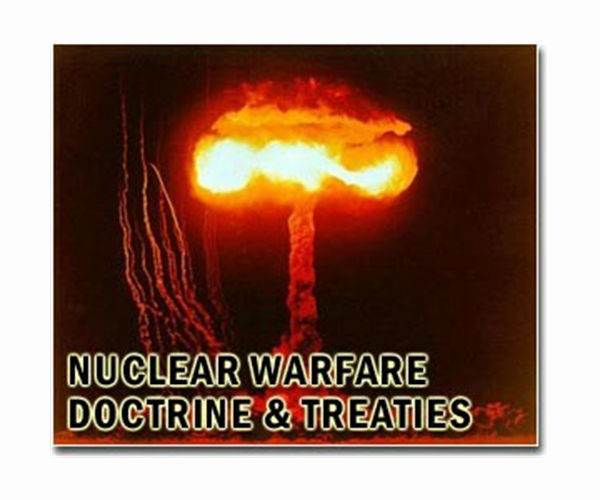
In October 2023, the National Nuclear Security Administration initiated a new series of experiments under Nevada's desert. These tests, involving a chemical explosion equivalent to 16.3 tons of TNT within the Nevada National Security Site's "P Tunnel," aim to refine the detection of low-yield nuclear explosions globally.
Dubbed Physics Experiment 1-A (PE1-A), this project marks the beginning of a non-nuclear experimental sequence designed to align computer simulations with empirical data, including seismic, acoustic, and electromagnetic responses from both underground and atmospheric tests. Stephen Myers, a researcher at Lawrence Livermore National Laboratory, highlighted these efforts at the Seismological Society of America's Annual Meeting.
"All of this is to help further our goal of monitoring nuclear explosions better and understanding the source physics of how those explosions generate seismic waves," Myers said.
The ongoing Physics Experiment 1 (PE1) builds on previous non-nuclear tests conducted at the site, which historically hosted extensive nuclear testing between 1951 and 1992. The new suite of tests, comprising seven unique experiments, will explore various emplacement conditions and include the use of sophisticated instrumentation to capture a comprehensive array of data. These include deploying a large electromagnetic coil to examine signal propagation through geological structures.
"These multiple experiments will help us aggregate critical data needed to verify and refine our simulation models used for predicting nuclear test signatures," Myers explained.
The improved computational models benefit from advancements in high-performance computing, enabling more precise simulations of explosion dynamics. "Verifying these models against real data is crucial for confirming their accuracy," Myers noted.
Data from these tests, including seismic and acoustic readings, will be accessible through a public seismic database after two years, contributing to broader research and verification efforts within the scientific community
