
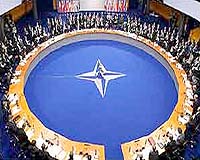
East-West disagreements over military strategy, technology and counter-terrorism cooperation marked the start of a meeting on Tuesday between the 55 countries in the Organization for Security and Co-operation in Europe.
One of the goals of the conference involving 300 top officials and military officers was to improve the transparency of military exercises involving European, North American and Central Asian forces, French general Christian-Charles Falzone told AFP.
But Russia, which requested the seminar, criticised NATO expansion into former Soviet republics.
"The CFE (Conventional Armed Forces in Europe) Treaty has lost all its value following two eastwards expansions by NATO," Russian deputy chief of staff General Alexander Skvortsov said.
The Europeans and Americans are pressuring Russia to withdraw its troops from breakaway regions in Georgia and Moldavia under the terms of the treaty.
But Skvortsov said: "An assessment of the military security situation unfortunately does not inspire optimism … and forces us to rely on our own efforts in terms of defence."
"We have every reason to fear a further worsening of the conflict between states over control of energy resources and their means of transit."
While Moscow Russia wants to expand the OSCE's political and military clout, one Western diplomat commented: "This must not be done at the expense of the OSCE's strengths in defending human rights, promoting democracy and monitoring free elections."
Skvortsov was also critical of the US intervention in Iraq and the lack of progress in disarmament. He called for improved cooperation including sharing intelligence to counter international terrorism and the threat posed by weapons of mass destruction.
"New decentralised, vague threats … make coalitions and partnerships more important than ever," said US General Lance Smith in a speech distributed in advance to delegates.
Security forces must adapt to extremists using information technology "to spread chaos and discontent around the world", he added.
The French delegation was expected to raise issues of disarmament, weapons smuggling and demands placed on soldiers involved in peacekeeping missions.
"Our forces must be active, permanently available and sufficiently versatile," a French official said.
Source: Agence France-Presse
