
Lockheed Martin has introduced a software-driven solution aimed at connecting the United States' most sophisticated warfighting systems, advancing the Department of Defense's (DoD) vision for Combined Joint All-Domain Command and Control (CJADC2).
The company's self-funded CJADC2 Interoperability Factory is a modular, open-architecture software framework designed to bridge communication gaps between disparate machine languages of advanced military systems. This capability is crucial for enhancing data exchange, improving interoperability, and significantly boosting situational awareness across platforms.
Following successful internal demonstrations, Lockheed Martin plans to present the system to defense stakeholders and integrate it into future government exercises for field validation in the coming months.
Enhancing Combat Readiness through Interoperability
Interoperability remains fundamental to national defense strategy, enabling the DoD and allied forces to maintain technological and tactical superiority against evolving threats. While newer weapon systems are built with interoperability in mind, Lockheed Martin's CJADC2 Interoperability Factory is designed to ensure seamless integration between both legacy and future systems.
"To deter aggression, we must maintain overmatch, yet many of our existing advanced weapon systems were not initially designed to interconnect and communicate efficiently," said Ron Fehlen, Vice President, Mission Architecture, National Security Space. "Currently, these systems operate using a dozen different software languages, and that's where the CJADC2 Interoperability Factory plays a crucial role."
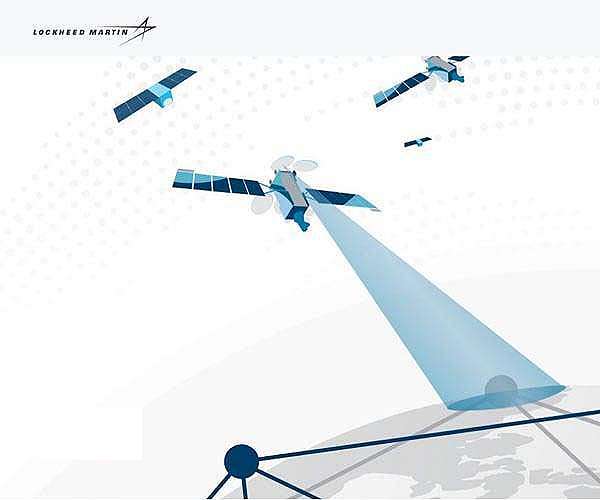
The factory employs a "systems of systems" approach to accelerate data-sharing between assets such as AEGIS, F-35, HIMARS, and SDA Transport Layer satellites. This reduces decision-making timelines to near real-time speeds, dramatically enhancing mission effectiveness.
Functionality and Design of CJADC2 Interoperability Factory
The CJADC2 Interoperability Factory utilizes an open-architecture software stack designed for seamless cross-domain connectivity. It ensures that existing and future military platforms can integrate effortlessly, optimizing their performance in joint operations.
Key attributes of the CJADC2 Interoperability Factory include:
– A repository of verified and validated data translators, supporting interoperability across Lockheed Martin's diverse portfolio and external platforms, including DARPA's STITCHES framework.
– Industry-standard interfaces, APIs, and cloud-based functionality, allowing for easy third-party integration.
– Compatibility with DevSecOps environments, ensuring seamless adaptation to industry-standard data formats.
– A highly modular and adaptable design that allows for easy updates and mission-specific configurations.
– Lockheed Martin's proprietary Smart Translator applications, which embed integrated cybersecurity and multi-level security from inception.
– A scalable system that fosters collaboration between Lockheed Martin and other industry stakeholders to create a unified defense ecosystem.
"We believe in open standards and the power of interoperability to drive innovation and operational efficiency, ultimately ensuring our customers maintain strategic superiority," Fehlen added.
AI-Driven Automation and Development
Lockheed Martin is leveraging artificial intelligence (AI) to accelerate system integration and improve the speed of interoperability. The Lockheed Martin AI Center (LAIC) is driving these advancements through:
– AI-enhanced developer tools and Software Development Kits (SDKs) that support decentralized applications and hardware integration at the tactical level.
– Model-Based Systems Engineering (MBSE) to automate software code generation, reducing risk and development time for new data translators.
– AI-powered mission services that translate unstructured data into actionable tactical messages.
– A next-generation AI-enabled control plane capable of adapting to evolving data standards at machine speed.
"AI is crucial to our operations, but human oversight remains essential," Fehlen emphasized. "While AI assists in rapid decision-making, human operators retain control over validation and execution."
Successful Early Demonstrations and Future Plans
In just five months, Lockheed Martin's cross-functional teams established a DevSecOps pipeline that integrated various cutting-edge security and AI investments. Initial demonstrations focused on Anti-Surface Warfare (ASuW) missions, prioritizing commonly used translator nodes as defined by the Joint Industry Standards Working Group (JISWG).
Early testing successfully linked the Open Mission Systems-Universal Command and Control Interface (OMS-UCI) with the TADIL-J standard, a variant of Link 16 communications.
"This initial success gives us confidence in expanding connectivity to additional translator nodes," Fehlen noted. Future iterations will include support for Integrated Broadcast System (IBS) messages and the Multifunction Advanced Datalink (MADL).
Looking ahead, Lockheed Martin plans to conduct a series of prototype demonstrations for military stakeholders, with an Initial Operational Capability (IOC) target set for later this spring.
"We have moved beyond conceptual discussions; now, we're demonstrating real-world connectivity between these advanced warfighting systems," Fehlen concluded.
